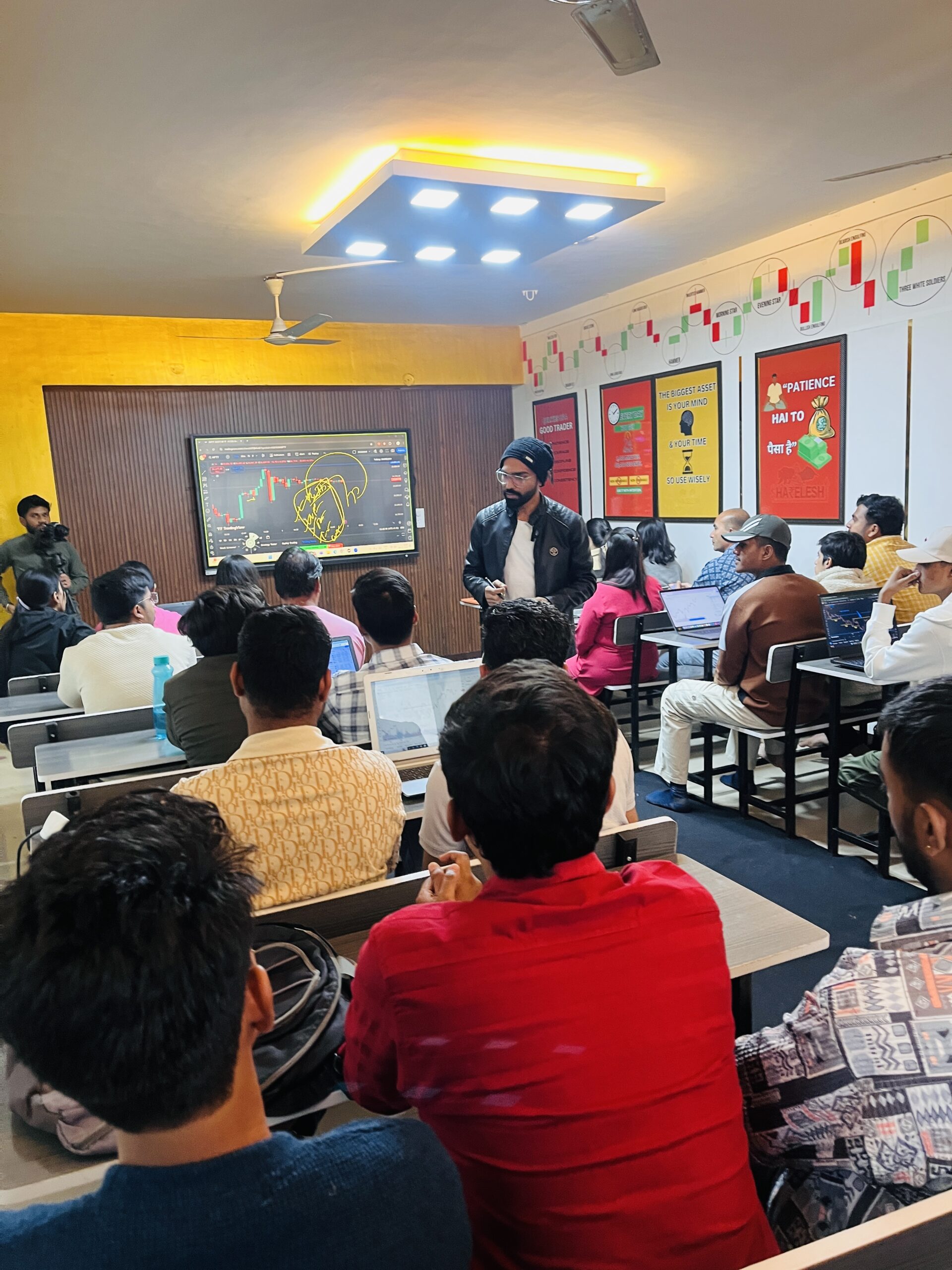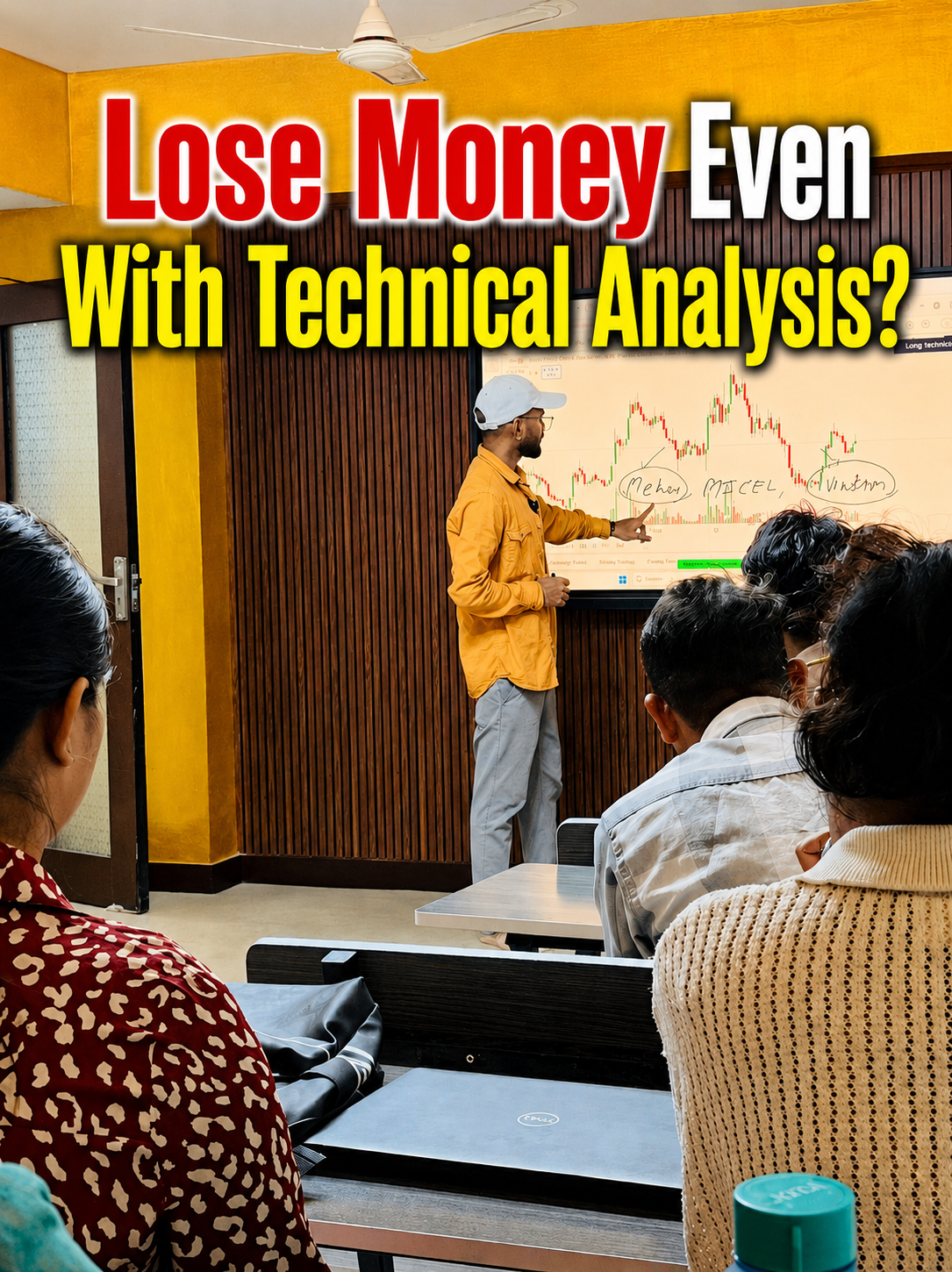

Why Most Traders Fail Despite Having Good Trading Strategies
In my 17+ years as a trader and mentor, I have met thousands of students. Some of them have sharp analytical minds. They understand candlestick patterns, can read charts fluently, know their indicators inside out. And yet, many of them kept losing money not because their strategy was wrong, but because of what happened in their head the moment a trade went against them.
The most painful pattern I see repeatedly is this: a student has a bad trading day. The market hits their stop – loss. Instead of closing the screen and moving on, they immediately open another trade bigger than the last one thinking, “The market took my money, and I will take it back from the market no matter what.”
That single thought “I will recover from the market only” has destroyed more trading accounts than any bad strategy ever could.
This is revenge trading. And it is just one of the many psychological traps that turn potentially good traders into frustrated ones.
After working with thousands of students across stock market, forex, and crypto courses, I can tell you with complete confidence: trading psychology is not a soft skill. It is your most important trading skill. You can have the best strategy in the world, but if your mind is not disciplined, that strategy will fail every single time.
This guide is about fixing that for good.

What Is Trading Psychology and Why Is It Important in Trading?
Trading psychology refers to the emotions, mental habits, and cognitive patterns that influence your decisions when real money is on the line. It is not motivational advice. It is not about “staying positive.” It is about understanding why your brain behaves differently the moment your capital is at risk and building systems to manage that.
Here is proof that psychology matters more than strategy: According to a SEBI study, 7 out of 10 individual intraday traders in India incurred losses. Most of these traders knew what a stop-loss was. They had strategies. They had done analysis. The gap was not knowledge it was execution under emotional pressure.
When you paper trade, your results look great. The moment you switch to real money, entries get missed, stop-losses get moved, profits get cut short. The strategy did not change. Your psychology did.
Mastering trading psychology means building the mental discipline to follow your plan even when fear says “exit now”, even when greed says “hold just a little longer”, and even when your ego says “recover what you lost before the session ends.”
The 4 Emotional Traps That Destroy Traders in the Stock Market
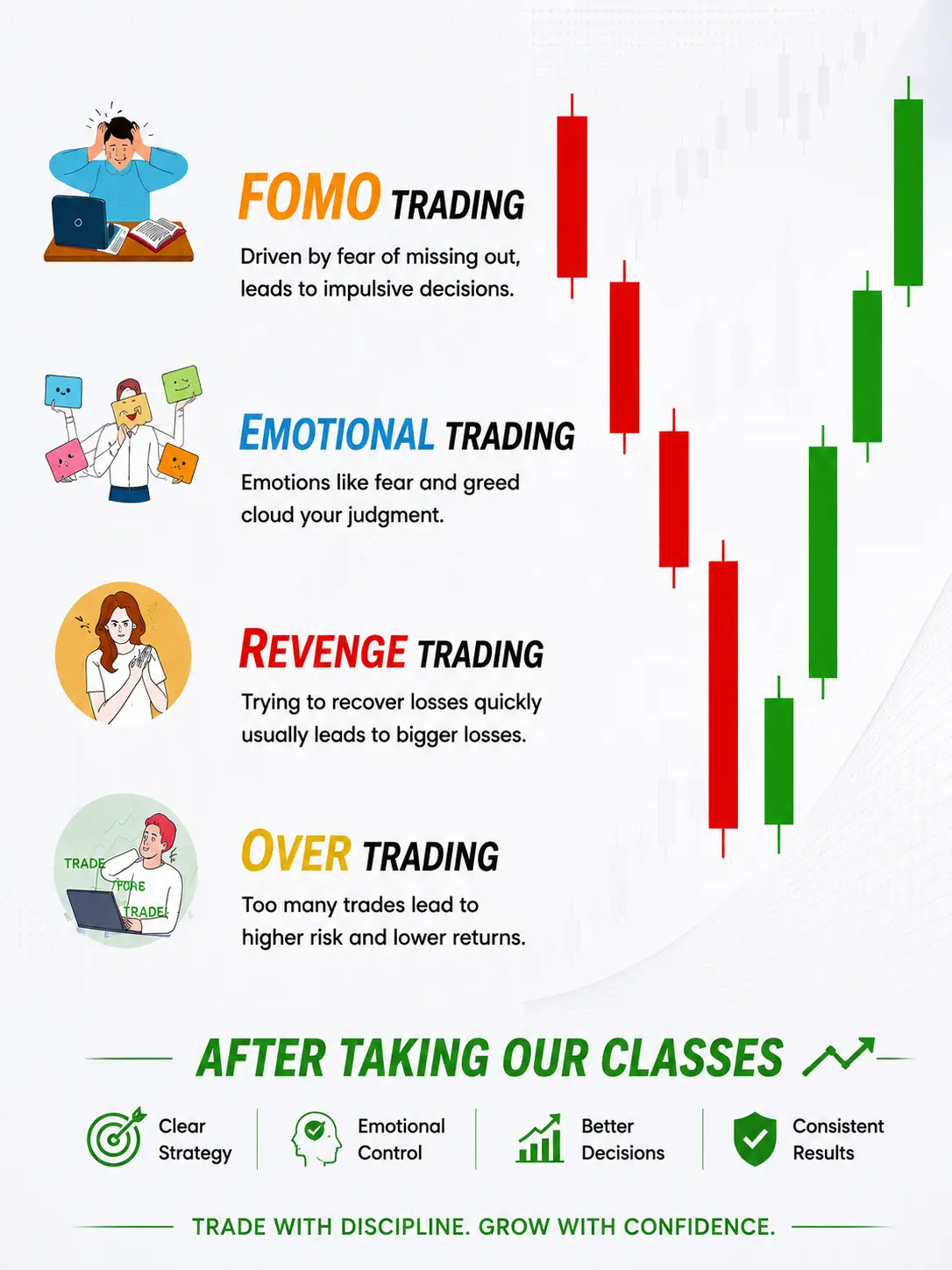
1. Emotional Trading : The Invisible Brake
Fear in trading appears in two forms, and both are destructive.
The first is fear of loss. This causes traders to exit winning trades far too early, locking in tiny profits while leaving the majority of the move on the table. A trader sets a target of Rs.5,000 profit but exits at Rs.1,500 because the trade pulled back slightly and fear kicked in.
The second is fear after loss. This is equally damaging. After two or three consecutive losing trades, many traders simply cannot press the buy button even when a textbook – perfect setup appears. The fear of being wrong again completely overrides their analysis.
I see this constantly among my students. They know the setup is valid. They can point to every reason the trade should work. But their hand freezes on the mouse because their last trade hurt them emotionally.
2. Over Trading : The Invisible Accelerator
Over trading is more dangerous than fear because it disguises itself as confidence. It feels good when it is happening.
over trading causes traders to hold winning positions far beyond their original target, convinced the trade will keep running. It causes them to suddenly double or triple their position size after a winning streak, taking on risk they have not planned for. It causes them to ignore their profit target and chase for more right until the market reverses.
The internal voice of greed sounds like this: “I’m on a roll today. Let me make the most of it.” And that is exactly when the damage is done.
Define your profit target and stop-loss before you enter every single trade. When your target is hit, take the profit and close the trade. Discipline is not about being right it is about being consistent. The trader who takes 70% of every move consistently will always outperform the trader who chases 100% and gives it all back.
3. FOMO : The WhatsApp Trade That Never Works
FOMO – Fear of Missing Out is the most widespread psychological trap among Indian traders in 2026, and I see it every day in my student community.
The scenario plays out like this: A stock or a crypto coin suddenly starts moving sharply. WhatsApp groups and Telegram channels light up. Screenshots of profit flood in. Everyone seems to be making money except you. You had not planned this trade. The entry point has already passed. But you cannot bear to be left behind – so you jump in anyway, at the top of the move, right when it is about to reverse.
FOMO trades share the same profile almost every time: entered late, no clear stop-loss plan, position size too large because of the emotional urgency, and exited in a panic when the trade moves against you. The people sharing screenshots in the WhatsApp group entered much earlier. You entered at the worst possible moment.
In crypto trading, FOMO is especially dangerous because the market runs 24/7 and moves can be extreme. A coin can move 30% in hours. The FOMO is extreme. And the reversal, when it comes, is equally extreme.
Remind yourself “If I miss this move, an identical setup will appear again within a few sessions.” In liquid markets, setups repeat. The scarcity you feel in that moment is an illusion created by your emotions, not the market.
4. Revenge Trading : The Most Expensive Emotion in the Market
This is the one I want you to read most carefully, because in my experience as a mentor, revenge trading is the single biggest account-destroyer I have witnessed across thousands of students.
Here is the mindset that makes revenge trading so dangerous: “The market took my money. I will take it back from the market in any condition, no matter what.”
This thinking sounds logical on the surface. It sounds like determination. But it is one of the most financially destructive thoughts a trader can have.
When a trader enters revenge mode, every decision that follows is driven by emotion not analysis. The position size increases because they want to recover faster. The setup quality drops because they cannot afford to wait for the right one. The stop-loss disappears because they are convinced this trade must work. And when it does not work, they do it again even bigger, even more desperate.
I have seen students turn a Rs.3,000 loss into a Rs.30,000 loss in a single afternoon all because they could not accept the first loss and walk away.
But the story that stays with me the most the one I share with every new student who walks into my institute is this one.
One of our student runs his own ambulance service. A hardworking, self-made man with three ambulances, a stable business, and a good life. Like many others, he was introduced to options trading by a friend with a simple idea: earn some extra income on the side. In the beginning, as it often goes, he made some profit. The market was kind to him early. And that early profit was the most dangerous thing that could have happened to him because it made him believe he understood the market.
Then the losses started. As they always do.
Instead of stopping, stepping back, and learning properly, he did what revenge trading pushes every trader to do he tried to recover quickly. He increased his position sizes. He traded more frequently. He chased every move. And the losses compounded faster than he could process.
To cover his mounting losses, he began risking things that had nothing to do with trading. He leveraged his ambulances. He risked his house. He took personal loans. Within just one year, his total loss had reached approximately Rs.60 lakhs.
Rs.60 lakhs. Gone. Not because of a bad strategy. Because of an uncontrolled mindset.
After everything collapsed, he finally came to our institute for a demo session. But even in those early days of learning, his mindset was still stuck in recovery mode. He was still looking for the fast way back. It took a long time patient, consistent work to rebuild how he thought about trading entirely. Today, things are slowly getting better. He has completely stopped options trading for now, because he finally understands the truth that changed everything for him:
Without control over your mindset, no strategy in the world will save you.”
His story is not unique. I have seen versions of it hundreds of times. The names change. The professions change. The amounts change. But the psychology is always identical the desperate need to recover, the refusal to accept a loss, and the catastrophic decisions that follow.
Build this rule into your trading plan as a non-negotiable: after any losing trade, you must step away from the screen for a minimum of 20–30 minutes. No exceptions. Use that time to review what happened calmly. Eat something. Drink water. The market will be there when you return. Revenge will not make you money it will only make your losses larger.

The 4 Emotional Traps That Destroy Traders in the Stock Market
Beyond the four emotional traps, your brain runs several automatic programs that quietly damage your trading decisions without you even realising it.
Confirmation bias makes you seek out only the information that supports what you already believe. If you want a stock to go up, you will unconsciously focus on bullish signals and ignore every bearish signal that contradicts your view. You will curate evidence to match your trade, instead of letting the evidence guide your trade.
Loss aversion is a well-documented psychological reality losses feel approximately twice as painful as equivalent gains feel good. This is exactly why traders hold losing trades far too long. Cutting a loss feels worse than the actual financial damage justifies. So the brain delays, delays, and delays until a small loss becomes a catastrophic one.
Overconfidence bias appears after a winning streak. Three or four good trades and suddenly the trader believes they have cracked the market. Risk management loosens. Position sizes balloon. And when the inevitable losing trade arrives, it hits far harder than it should.
Recency bias causes traders to place too much weight on the most recent result. After three winners, the next trade “must” win too. After three losers, the next trade “must” also fail. Neither assumption has any logical basis but the brain makes them automatically.
Recognising these biases will not eliminate them. But awareness creates a pause between the emotion and the action and that pause is where disciplined trading lives.
Trading Psychology in Stocks vs Forex vs Crypto: Key Emotional Differences
The core emotions in trading – fear, greed, FOMO – are the same across all markets. But the intensity of those emotions varies significantly depending on what you are trading.
Stock market trading in India operates within structured hours (9:15 AM to 3:30 PM). This creates natural psychological boundaries. You cannot trade at midnight in a panic. The forced session break helps manage emotional pressure. However, Indian stock traders face unique triggers – Budget announcements, RBI policy days, and Nifty/Bank Nifty expiry every week – that create sudden emotional spikes that can override months of disciplined trading in minutes.
Forex trading introduces the added pressure of a 24-hour market. There is no closing bell that forces you to stop. A forex trader can sit in a losing trade through the night, watching every tick, unable to sleep, making increasingly emotional decisions at 2 AM that they would never make during market hours. Forex also involves leverage that amplifies both gains and losses, which means every emotional mistake is magnified.
Crypto trading takes the psychological challenge to its highest level. The market never closes. Prices can move 20–40% in hours. Social media, YouTube influencers, and Telegram groups create constant FOMO. The crypto Fear and Greed Index regularly swings between extreme fear and extreme greed and retail traders tend to buy at peak greed and sell at peak fear, which is the exact opposite of what they should be doing.
If you are trading across all three markets as many of my students do you need to be especially conscious of carrying emotional baggage from one market into another. A bad crypto trade at midnight should not influence your Nifty trade the next morning.
Why Indian Traders Make Emotional Decisions in the Stock Market
In my years of mentoring Indian traders, I have identified specific recurring events that predictably cause emotional decision-making. Being aware of these in advance is half the battle.
WhatsApp and Telegram Tips are perhaps the most common source of FOMO-driven bad trades in India. A message arrives: “Buy this stock now, target Rs 500, confirmed tip.” The trader who forwarded that message entered three days ago. By the time it reaches your screen, the move has already happened. Yet traders jump in anyway because the message came from a “trusted” group, and everyone else seems to be making money.
Budget Day and RBI Announcement Days create a cocktail of FOMO before the announcement and panic immediately after. Options traders, in particular, get crushed on these days by IV crush they buy expensive options before the announcement, the event happens, and even if the direction is correct, the options lose value because the uncertainty premium collapses. The psychological damage from these sessions often leads to revenge trading for days afterward.
Nifty and Bank Nifty Expiry Days – every Thursday in India — are emotionally supercharged sessions. The rapid time decay of options, sudden sharp moves in both directions, and the feeling that “I must recover before expiry” push traders into increasingly reckless decisions as 3:30 PM approaches.
The rule for all of these: Pre-decide your behavior before these events occur. If you are not going to trade on Budget Day, decide that the night before and commit to it. Having a written plan for high-volatility events removes the in-the-moment emotional decision-making that causes damage.
The Knowing-Doing Gap: Why Traders Keep Breaking Their Own Rules
Here is the most frustrating thing about trading psychology: you already know most of this. You know you should cut your losses. You know you should not revenge trade. You know FOMO trades are bad. And yet you still do them.
This is called the knowing-doing gap and it is the central challenge of trading psychology.
The gap exists because knowledge lives in the rational part of your brain, but trading decisions under pressure are made by the emotional part. When a trade goes against you and your account is bleeding in real time, your rational knowledge does not have strong enough access to your decision-making. The emotional brain has taken over.
The only way to close the knowing-doing gap is through systems, not willpower. Willpower is exhaustible. It weakens under stress, after losses, during fatigue. Systems are structural they make the right behavior the default, regardless of your emotional state.
This is why every serious trader needs pre-defined rules: a maximum daily loss limit after which trading stops automatically, a mandatory waiting period after a losing trade, a fixed position size that does not change based on how you are feeling that day. These systems protect you from yourself.
How to Build Real Trading Discipline: Practical Habits That Actually Work
Trading discipline is not a personality trait it is a skill that is built through deliberate practice. Here is how to build it practically.
Trade with a written plan. Every trade you take should have a written entry reason, stop-loss level, and target before you enter. If you cannot write these three things down, you are not ready to take the trade. The act of writing creates accountability.
Set a daily loss limit and honor it without exception. Decide in advance the maximum amount you are willing to lose in a single day. When that level is hit, close the platform and stop trading. Non-negotiable. This single rule, consistently followed, will save you from the worst revenge-trading disasters.
Review your trades weekly, not just when something goes wrong. Most traders only analyze their trades after a bad week. Review every week wins and losses both. Pattern recognition in your own behavior is how you identify and fix psychological leaks.
Reduce position size during emotional periods. If you are stressed, tired, angry, or going through personal difficulties trade smaller or do not trade at all. Your emotional state directly affects your execution quality.
The Pre-Market Mental Routine: A Daily Checklist for Disciplined Traders
The most consistent predictor of a disciplined trading day is the mental state you bring to the market before a single trade is placed. Here is a simple pre-market routine that takes 10–15 minutes and makes a measurable difference:
Check global markets and overnight news – Know what happened while you were sleeping. Gaps, geopolitical events, or central bank announcements can change the entire tone of the session.
Review your trading plan for the day – What setups are you looking for? What will you not trade today? Which levels are you watching?
Set your daily loss limit – Write it down. ₹X is the maximum I will lose today. After that, I close the platform.
Assess your emotional state honestly – Are you well-rested? Are you carrying frustration from yesterday’s session? Are you distracted? If yes to any of these, reduce your position size for the day.
Remind yourself of your rules – Spend two minutes reading your trading rules. It sounds simple. It works.
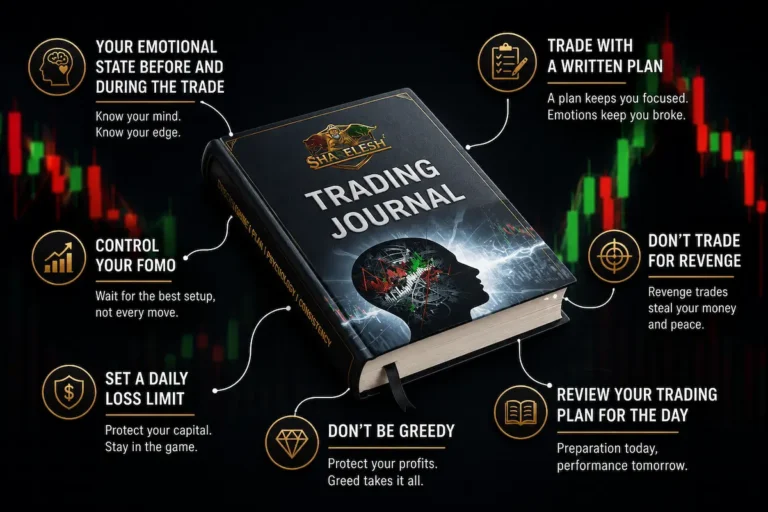
The Power of a Trading Journal: Your Mirror in the Market
A trading journal is the most underused tool in a retail trader’s toolkit and one of the most powerful tools for improving trading psychology.
A good trading journal records not just your entry and exit prices, but your emotional state before and during the trade. Why did you take this trade? Were you following your plan or were you reacting emotionally? How did you feel when it went against you? What did you do?
Over time, your journal becomes a mirror. You will start to see patterns in your behavior that are impossible to see trade by trade. You will notice that you consistently overtrade on Thursday expiry days. You will notice that your worst trades always happen in the first 30 minutes after a losing trade. You will notice that your best trades are taken on days when you followed your pre-market routine.
This self-knowledge is the foundation of genuine improvement in trading psychology. It is not enough to read about these concepts you need data about your own behavior to change it.
Start simple: After every trading session, write three sentences what went well, what went wrong, and what you will do differently tomorrow.
Conclusion
After 17+ years in trading and working with thousands of students across stock market, forex, and crypto, the one truth I come back to again and again is this: the market does not take your money, your emotions do.
Every student who has consistently improved their results has done so not by finding a better strategy, but by developing better psychology. They learned to cut losses without hesitation. They stopped revenge trading. They stopped chasing WhatsApp tips. They built systems that protected them from their worst impulses. And their accounts reflected that discipline.
Trading psychology is a skill and like every skill, it can be learned and improved. The traders who master the mental game are the ones who are still trading profitably years from now. Everyone else either quits or keeps repeating the same emotional mistakes and wondering why their strategy is not working.
Your strategy is probably fine. Your mind is what needs the work.
If you are serious about building both the technical skills and the psychological discipline to trade consistently across stocks, forex, and crypto our structured trading course is designed exactly for that. We cover strategy, risk management, and the mental game together, because none of them work in isolation.
Disclaimer: The content shared on this blog is purely for educational and informational purposes related to the stock market and trading. We do not provide any financial advice, investment recommendations, or profit guarantees. Trading and investing involve market risk.