
“5 Saal Se Trading Kar Raha Hoon” - Then Why Are You Still Confused About Where to Buy and Sell?
The beginner knows they don’t know. They are careful, they ask questions before placing a trade. That hesitation actually protects them.
The most dangerous trader is the one who has been in the market for 3, 4, maybe 5 years has placed hundreds of trades and still genuinely believes they know everything. They don’t know where to buy. They don’t know where to sell. But ask them if they have a knowledge problem?
“Nahi bhai, market ne dhoka diya.”
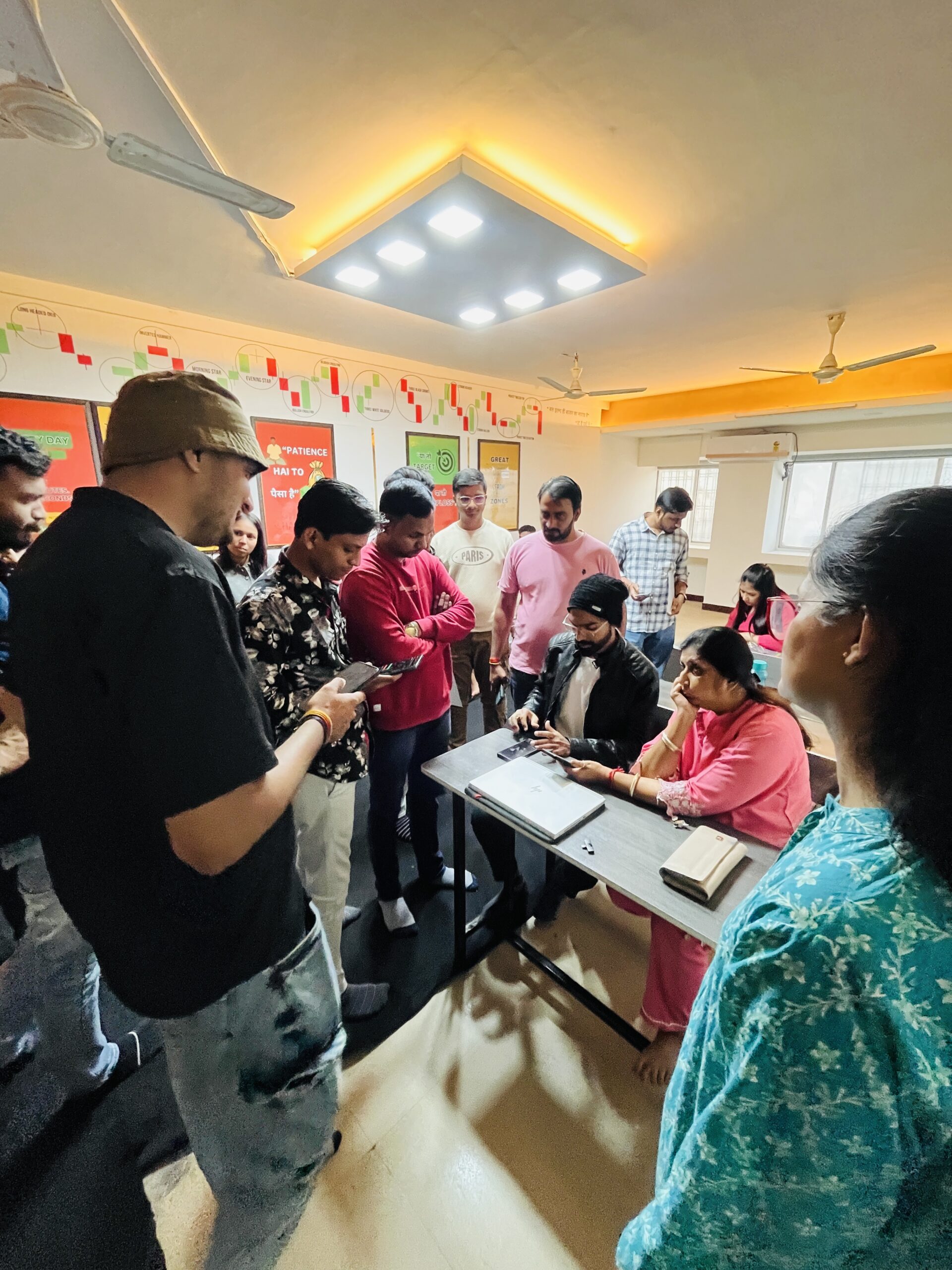
In my years of teaching stock market, forex and crypto trading, 75% of students who walk into my classroom come after losing money for years – while being completely convinced the market was the problem. Not them. Never them.
This blog is for that trader. The one who is confused but won’t admit it. The one who has time in the market but not real trading knowledge. The one the market keeps trying to teach but whose ego keeps refusing the lesson.
Years in the Market vs Years of Learning They Are Not the Same Thing
Let me ask you something honest.
You have been trading for 3 years. In those 3 years, how many of those days did you actually study the market versus simply react to it?
There is a massive difference between the two.
Placing trades every day for 3 years does not mean you have 3 years of trading knowledge. It may simply mean you have 3 years of repeated mistakes the same mistakes, dressed in different market conditions.
Time in the market without study is just expensive repetition.
Most traders I meet skip the learning entirely. They jump straight into live trades, lose money, blame external factors and repeat the same cycle for years. They are not building experience. They are building costly habits.
The Trader Who Knew Everything - Except the Most Important Thing
In my classroom, I always ask new students one simple question:
“Do you know when to enter the market and how to identify the right trade?”
The answer I get almost every time from experienced traders is something like this:
“Sir, mujhe sab kuch pata hai — bas yahi sikhna hai ki sahi trade kaise pata chalta hai.”
Read that again slowly.
They are telling me they know everything, except how to identify the right trade. But identifying the right trade IS the knowledge. That IS the entry. That IS the exit. That is the entire game of trading.
But in their mind? They are almost there. Just one small thing missing.
That one small thing is actually everything.
I have met students who have been trading for 3 to 4 years and still cannot explain WHY they entered a trade. When I ask them directly they get uncomfortable. They change the subject. They say the market was unpredictable. Because accepting that they don’t know the answer means accepting that all those years, all those losses were not the market’s fault.
And that is a very difficult thing for the ego to sit with.
"Market Ne Kiya Betray" - The Blame Game That Keeps You Stuck
Ask a losing trader why they lost money and listen carefully.
“Market volatile tha.”
“Achanak news aa gayi.”
“Yaar ne galat tip di.”
“Broker ka platform slow tha.”
Rarely – very rarely – will you hear: “Mujhe sahi jagah enter karna nahi aata tha.”
In my experience teaching hundreds of traders, students who lack patience are the fastest to blame everything around them. They are not practicing properly. They are not studying charts. They are jumping into trades on instinct and when those instinct-based trades fail, the market becomes the villain.
The blame game feels comfortable in the moment. But it is financially catastrophic over time. Because as long as the problem is “out there” you never fix what is “in here.”
And the market? The market does not care about your excuses. It will keep taking money until you stop blaming and start learning.
The 7 Warning Signs You Have a Trading Knowledge Gap
Be completely honest with yourself as you read these:
1. You don’t know WHY you entered a trade – only that it “felt right”
A feeling is not a strategy. If you cannot explain your entry in one clear sentence, you don’t have a plan.
2. You have been trading for years but are still confused about where to buy and sell
This is the clearest sign. Time without clarity is not experience, it is confusion on repeat.
3. Every time you lose, the reason is always external
Market, news, broker, tip never your own analysis or entry decision.
4. You skip practice and jump straight to live trading
Demo accounts and paper trading feel “boring” to you but losing real money every day feels completely normal.
5. You feel irritated when someone suggests you need more education
“Main 4 saal se kar raha hoon, mujhe kya sikhayega?”
This reaction itself is the answer to why you are still losing.
6. You remember your winning trades clearly but your losses are always “bad luck”
You celebrate your wins as skill and dismiss your losses as circumstance. This gap in self-awareness is costing you enormously.
7. You have never kept a trading journal
If you are not writing down your trades, your entry reasons, your exits and your emotions – you are not learning from the market. You are just paying it fees.
If 3 or more of these apply to you, you have a trading knowledge gap. And that is completely okay. The only problem is refusing to see it.
Why Your Ego Is Costing You More Than Your Bad Trades
Here is something I tell every student directly:
Your ego is more expensive than your losses.
A bad trade costs you money once. But an ego that refuses to accept a knowledge gap costs you money every single day for years. It keeps you repeating the same entries, rejecting the right learning, and blaming everything outside while the real issue sits quietly inside.
I have seen this pattern especially in Indian retail traders. And the reason is this – most people enter the market looking for fast earnings without proper learning first. When losses come, admitting a knowledge gap feels like admitting personal failure. So the market becomes the enemy instead.
But I want to say this clearly: The market has no enemies. It has no opinion about you. It simply responds to preparation or the lack of it.
Doing a Trade vs Understanding a Trade — The Real Difference
Here is a question I want you to sit with right now:
Can you explain exactly why you entered your last 5 trades?
Not “it looked like it would go up.” A real explanation the trend direction, the entry signal, the stop loss logic, the risk to reward ratio.
If you cannot – you were doing a trade. Not understanding one.
Doing trades gives you activity. Understanding trades gives you consistency. And the market only rewards one of those two things.
The Honest Self-Audit — 5 Questions Every Trader Must Answer
Sit quietly. No charts, no phone. Just you and these five questions:
- Can I explain my trading strategy in simple words to someone who knows nothing about markets?
- In my last 10 trades, how many did I enter with a clear pre-planned reason?
- When I lose, what is my first thought — “what did I do wrong” or “what went wrong in the market”?
- Have I spent more time placing trades this month than actually studying?
- If someone asked me to teach them how to identify a good trade entry — could I do it confidently right now?
Your honest answers to these five questions will reveal more about your knowledge gap than any indicator ever will.
How to Actually Close the Knowledge Gap
Accepting the gap is step one. Here is what comes next:
Stop live trading temporarily if you are consistently losing. Go back to demo. There is no shame in this, there is only wisdom and saving of capital.
Study with structure, not randomly. One concept at a time. Practice it until it becomes second nature before moving to the next.
Keep a trading journal. Every trade, every entry reason, every exit, every emotion. Review it weekly. The patterns will surprise you.
Practice identifying trades before placing them. Mark your entry on a chart BEFORE the candle closes. Check if you were right. Do this 100 times before risking real money.
Learn from someone who has actually been through it. Not YouTube channels selling dreams but a structured learning environment where you are held accountable and made to practice.
The students in my classes who recover fastest after years of losses are never the most experienced ones. They are always the ones who finally said — “Sir, mujhe sach mein seekhna hai, properly.”
That one sentence changes everything.