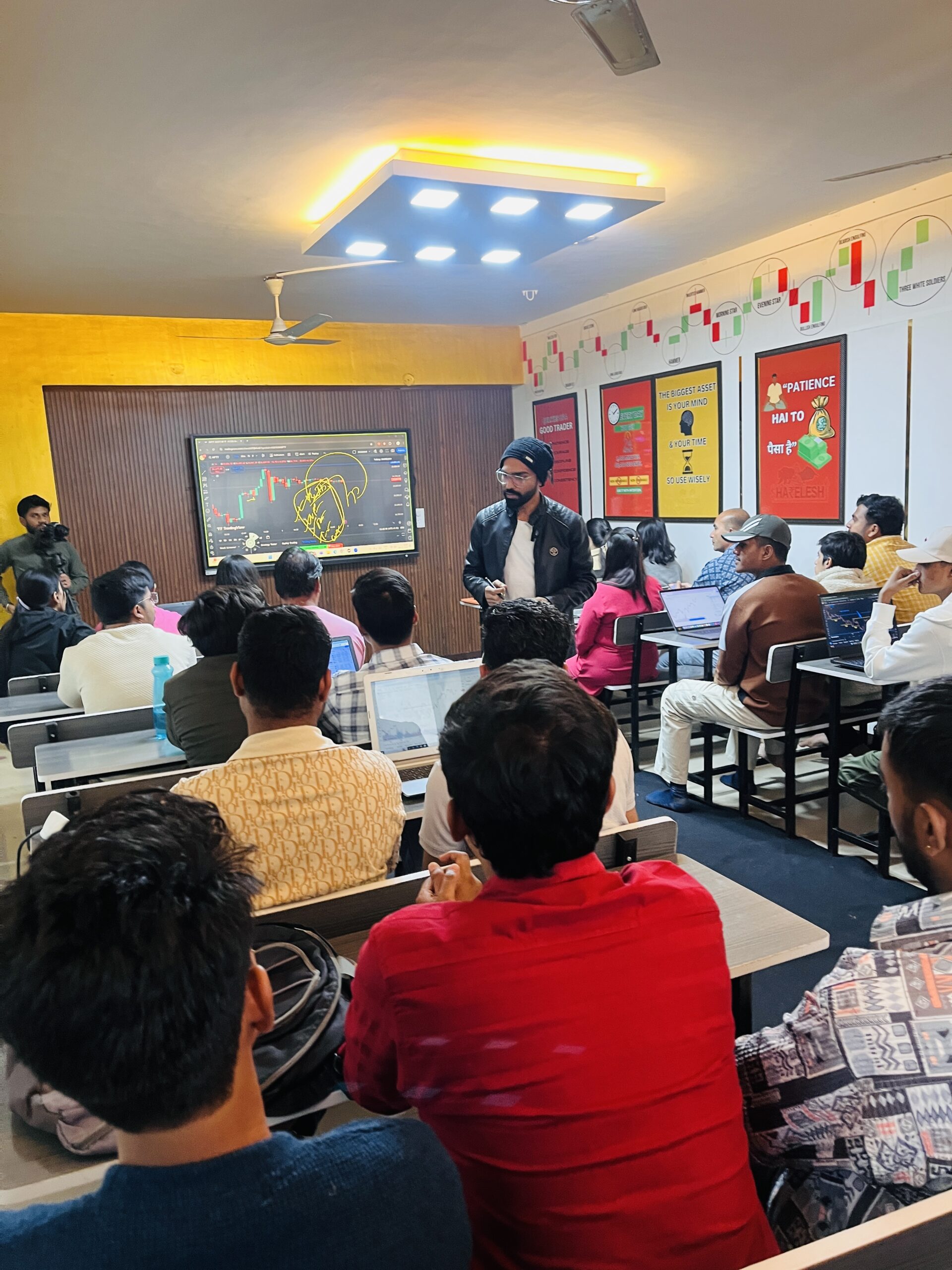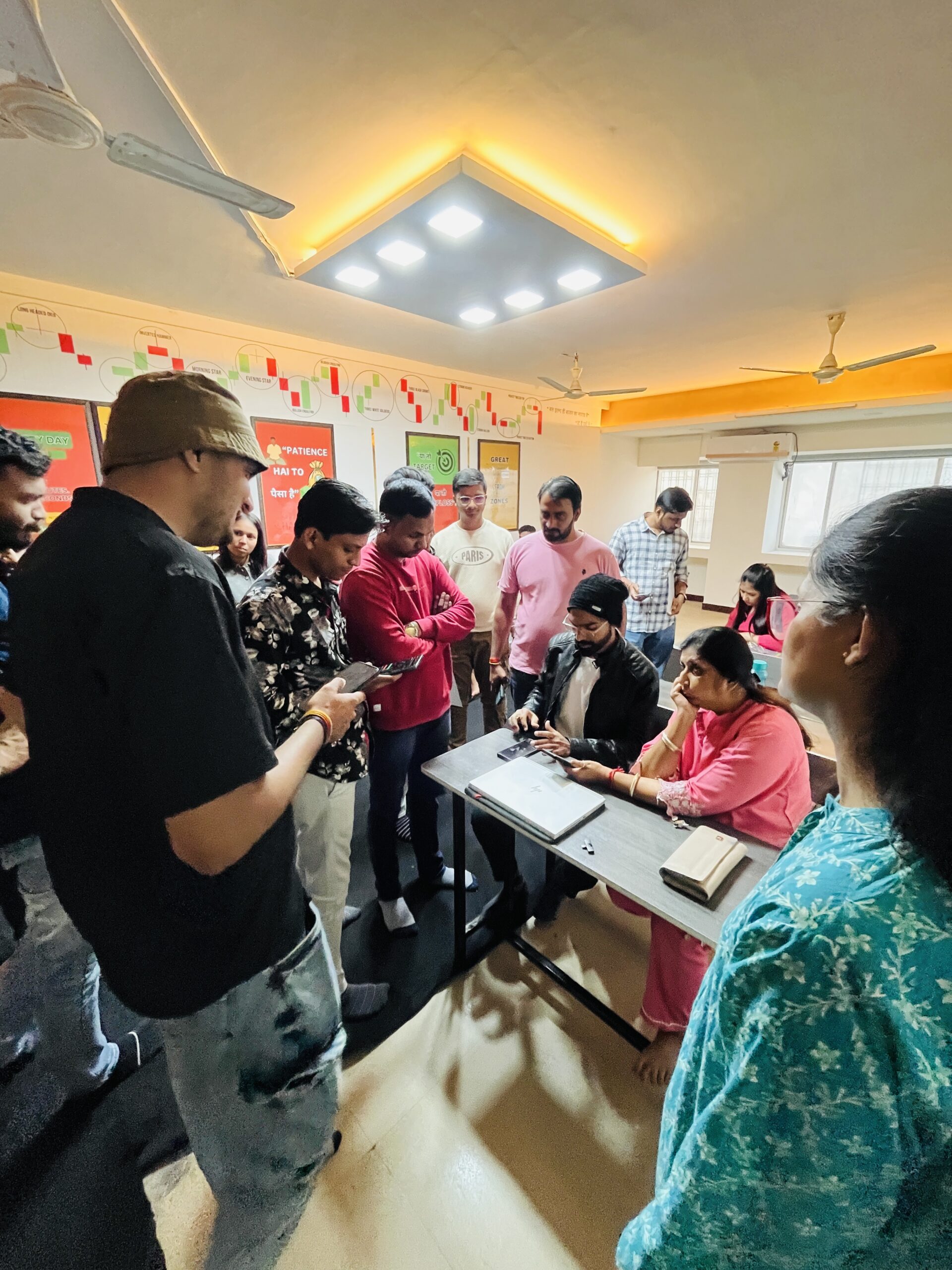

Every week at Sharelesh, a new student walks in and asks the same question.
They have watched YouTube videos showing traders making thousands in minutes from option trading. They have seen WhatsApp screenshots of massive profits from Nifty calls and Bank Nifty puts. They have heard friends talk about how options trading changed their financial life. And now they want to know before they put their money in is option trading actually safe?
It is the right question to ask. And at Sharelesh, we always answer it honestly – even when the honest answer is not what the student was hoping to hear.
Here is the data before the answer. According to SEBI’s official report, 95% of individual options traders in India lose money. Not a small loss. On average, Rs.2 lakh per trader over three years. The top loss-makers lost an average of Rs.28 lakh each. These are real Indians doctors, engineers, teachers, homemakers who asked the same question you are asking right now, got an incomplete answer, and paid for it with real money.
So is option trading safe for beginners in India?
Read this complete blog before you decide.
The Direct Answer - What Sharelesh Tells Every New Student
At Sharelesh, when a beginner asks “Is option trading safe?”, our answer is always direct and always the same:
No. Option trading is not safe for beginners who have not first built a consistent foundation in equity trading.
However and this is equally important – options become relatively safer once you have developed consistent equity trading experience, understand what you are actually trading, and apply strict risk management to every position.
The safety of options trading is not fixed. It is not permanently dangerous for everyone. It is dangerous specifically for unprepared traders and relatively manageable for properly prepared ones.
The difference between those two outcomes is not luck, not intelligence, and not finding the right strategy. It is the foundation you build before you touch options. At Sharelesh, that foundation is always equity trading first – without exception.
Why Cheap Option Premiums Feel Safe - But Can Cost You More Than You Think
The most dangerous misconception in Indian options trading is this: a cheap premium feels like a small risk.
A beginner looks at a Nifty Call option priced at Rs5. One lot of Nifty is 25 units. Total cost: Rs125. That feels like a Rs125 maximum loss. Safe, right?
Wrong. Here is what actually happens.
That Rs5 option is almost certainly deep out-of-the-money — meaning the market needs to move significantly in your direction before the option gains any value. The probability of this happening before expiry is very low. The time decay on a Rs5 option on expiry day is brutal it can go from Rs5 to Rs0.50 in two hours even if the market moves slightly in your direction.
Now the beginner buys not one lot but twenty lots because “it is only Rs125 per lot, so twenty lots is still only Rs2,500.” Suddenly, a Rs2,500 position feels like a small, safe bet. But twenty lots of Nifty means 500 units of exposure. A 1% move in the wrong direction on 500 units creates a loss that far exceeds the premium paid especially if the trader holds through theta decay and the option expires worthless.
At Sharelesh, I have seen this pattern more times than I can count. The cheap premium does not limit risk the way beginners think it does. It creates false confidence, encourages larger position sizes, and ultimately delivers larger losses than a single, properly sized trade in equity would ever have produced.
The cheapest options are not the safest options. They are often the most dangerous because they make reckless position sizing feel responsible.
What Makes Options Uniquely Dangerous for Beginners - 4 Hidden Risks
Beyond the premium trap, options carry four specific risks that equity trading does not and that most beginners discover only after losing money.
Risk 1 – Losing Money Without Being Wrong
Theta is the daily time decay of an option’s premium. Every single day, an option loses value simply because time has passed regardless of what the market does. An option buyer can be completely correct about market direction and still lose money — because the move happened too slowly and theta eroded the premium before the move materialised.
This means options buyers are fighting two battles simultaneously: market direction AND time. Equity traders only fight one: direction. This additional dimension of risk makes options fundamentally more complex than equity — not simpler.
Risk 2 – Implied Volatility Crush
When a major event – Budget, RBI policy, earnings approaches, options premiums inflate because of uncertainty. Traders buy expensive options before the announcement, expecting a big move. The event happens. The market moves. But the options lose value immediately because the uncertainty is resolved and implied volatility collapses. This is called IV crush and it destroys beginners who buy options before major announcements without understanding why premiums were high in the first place.
Risk 3 – Lot Size Creates Hidden Leverage
In India, options are traded in lots. Nifty options have a lot size of 25 units. Bank Nifty has 30 units. A single lot of Bank Nifty options at Rs200 premium costs Rs6,000. But that single lot controls exposure worth several lakhs of rupees. Most beginners do not calculate the actual exposure they only see the premium cost. This hidden leverage amplifies losses far beyond what the premium price suggests.
Risk 4 – Expiry Day Extreme Volatility
Thursday expiry in India when Nifty and Bank Nifty weekly options expire creates extreme intraday volatility that behaves completely differently from normal trading sessions. Options can swing 200–500% in either direction within minutes. Beginners who trade expiry day without experience mistake this volatility for opportunity. In reality, without deep market knowledge, expiry day is where most beginner accounts suffer their worst single-session losses.
The House Analogy - Why You Cannot Skip the Foundation
At Sharelesh, we explain the relationship between equity and options with an analogy that every student regardless of education level understands immediately.
If you want to build a house, what do you do first?
Do you start with the second floor? Do you begin with the roof? Or do you first dig deep and build a strong foundation?
The answer is obvious. No builder in the world starts from the second floor. The foundation always comes first because without it, every floor above collapses.
Options trading is the second floor. Equity trading is the foundation.
The F&O market – Nifty options, Bank Nifty futures, stock derivatives is built entirely on top of the equity market. The Nifty index is made of 50 equity stocks. Options derive their value from those stocks and indices. If you cannot read and trade equity profitably if you do not understand how stocks move, why they move, and how to manage a trade when it goes against you – you do not have the foundation to understand the derivative built on top of it.
One of our students at Sharelesh started options trading without learning equity first. He had watched YouTube tutorials on options strategies. He knew what a call and put was. He understood the concept of strike price. And within six weeks of opening his live options account, his capital was nearly gone. Not because options is impossible to trade but because he tried to build the second floor without a ground floor underneath it.
When he came to Sharelesh, we started him from the beginning. Equity foundation first. Three months of demo trading. Risk management discipline. And only after demonstrating consistent results in equity, did we introduce options as the next step in his learning. Today, he trades options but from a foundation that actually supports that activity.
At Sharelesh, this is non-negotiable: equity first. Options come after you are consistently profitable in equity – not before.
The 5 Conditions That Make Options Relatively Safer
Options trading is not permanently unsafe. It becomes relatively safer when five specific conditions are in place. At Sharelesh, these are the conditions we verify before any student is ready to move into options.
Condition 1 – Consistent Equity Profitability You have traded equity profitably for a minimum of 6 months. Not one good month – six consistent months across different market conditions. This proves your edge works and your discipline holds under pressure.
Condition 2 – Understanding of Options Mechanics You understand theta decay, implied volatility, the Greeks (Delta, Gamma, Theta, Vega), and how option premiums are priced – not just theoretically but practically. You can explain why an option lost value even when the market moved in your direction.
Condition 3 – Strict 1% Risk Rule Applied to Every Trade You never risk more than 1% of your total trading capital on any single options position. This means your total premium outlay – lot size multiplied by premium, must equal less than 1% of your capital. At Sharelesh, this rule is non-negotiable and applied to options even more strictly than to equity.
Condition 4 – 3 Months of Options Paper Trading Before placing a single real options trade, you have paper traded your specific options strategy for a minimum of 3 months recording every trade, every result, and every theta decay impact in your trading journal.
Condition 5 – Written Options Trading Plan You have a written plan that specifies which setups qualify for options entry, which expiry you trade, what your maximum premium spend per trade is, and exactly when you exit – both for profit and for loss. You do not make these decisions in real time. You make them in advance.
When all five conditions are met – options trading becomes a skill-based activity with manageable, defined risk. When even one condition is missing options remains dangerous regardless of how much you know about candlestick patterns or RSI indicators.
Options Buying vs Options Selling - Which is Safer for Beginners?
This is one of the most common follow-up questions at Sharelesh and the answer is more nuanced than most people expect.
Options Buying – Defined Risk, but Theta Works Against You When you buy an option, your maximum loss is the premium you pay. In that sense, risk is defined and limited. However, theta decay works against you every day you hold the position. The market must move in your direction quickly and significantly enough to overcome daily time decay. Most beginners who buy options lose not because the direction was wrong — but because the move was too slow and theta destroyed the premium.
For beginners, options buying feels safer because the maximum loss appears capped. In practice, the combination of wrong timing, theta decay, and IV crush means most options bought by beginners expire worthless.
Options Selling – Higher Probability, But Unlimited Risk Without Hedge Option sellers collect premium and profit from theta decay — time works in their favour. The probability of profit is statistically higher for sellers than buyers. However, naked option selling carries theoretically unlimited risk. A single unexpected large move can create losses many times the premium collected.
For beginners, naked options selling is significantly more dangerous than buying despite the higher win rate because the losing trades can be catastrophic without proper hedging.
The Sharelesh Recommendation for Beginners: Neither pure buying nor naked selling. If you must start options, begin with defined-risk strategies – buying options with enough time to expiry (minimum 2–3 weeks) and always with a clear stop loss on premium paid. Never sell naked options without a hedge until you have significant experience and capital to absorb adverse moves.
The Safest Way to Learn Options Trading in India
At Sharelesh, the safest learning path for options follows this specific sequence and skipping any step defeats the purpose of the entire framework.
Step 1 – Master Equity Trading First (Minimum 6 Months) Learn to read charts, identify setups, manage trades, and apply risk management consistently in equity. Become profitable in equity before approaching options. Use the equity profits — not your original savings — to fund your first options trades. This transforms your psychology entirely.
Step 2 – Study Options Theory Completely Before Practicing Understand theta decay, implied volatility, the Greeks, how option pricing works, and the difference between buying and selling options. At Sharelesh, we cover this as a dedicated module — not a sidebar to technical analysis.
Step 3 – Paper Trade Options for 3 Months Apply your options knowledge on a paper trading account for a minimum of three months. Record every trade. Track theta decay on your positions daily. Note how IV crush affects premiums around major events. Build the muscle memory of options execution before real money amplifies every emotion.
Step 4 – Start Live Options With Minimum Position Size When you move to live options trading, start with the smallest possible position size — one lot maximum per trade. Apply the 1% rule rigorously. Your first live options trades are extensions of your learning — not income generation attempts.
Step 5 – Never Trade Options on Expiry Day Until You Have 6+ Months of Live Experience Expiry day options trading requires a level of market reading and emotional control that takes significant experience to develop. At Sharelesh, we tell every beginner – expiry day is for observation and learning for your first six months of live options trading. Not for trading.
When Are You Actually Ready for Options? - Sharelesh Checklist
Use this checklist before placing your first real options trade. At Sharelesh, every student must answer yes to all seven before we support their transition to options.
Sharelesh Options Readiness Checklist
- Have I traded equity profitably for minimum 6 consecutive months?
- Can I explain theta decay with a real INR example?
- Do I understand what implied volatility is and how IV crush works?
- Have I paper traded my options strategy for minimum 3 months?
- Is my options position size within 1% of my total capital?
- Am I using equity profits — not savings — for my first options trades?
- Do I have a written options trading plan with entry, exit, and maximum loss defined?
If any answer is no – you are not ready for live options trading. Return to the step that produces a no answer and work on it until it becomes a yes.
Common Mistakes Beginners Make in Options Trading
After 17+ years of teaching at Sharelesh, these are the options mistakes I see most consistently and most expensively.
Mistake 1 – Starting options without equity foundation. This is the single most common and most destructive mistake. Options is a derivative of equity. Trading the derivative without understanding the underlying is like reading a map of a city you have never visited. The map may be accurate but you still get lost because you have no frame of reference.
Mistake 2 – Treating cheap premiums as small risk. A Rs5 option is not a Rs5 risk when bought in large quantities. Calculate your total exposure – premium multiplied by lot size multiplied by number of lots before every options trade. Never buy options in quantities that make your total outlay exceed 1% of capital.
Mistake 3 – Trading options on expiry day without experience. Expiry day volatility is extreme and behaves unlike normal market sessions. Beginners consistently treat it as an opportunity and consistently lose money on it. Until you have 6+ months of live options experience, observe expiry day — do not trade it.
Mistake 4 – Holding losing options hoping for reversal. Unlike equity stocks, options have an expiry date. A losing options position does not just lose money — it loses value faster as expiry approaches due to theta decay. The “it will come back” logic that is sometimes viable in equity is almost never viable in options near expiry. Cut losses quickly and move on.
Mistake 5 – Following Telegram and YouTube signals for options. Options signals “Buy Nifty 24000 CE at Rs150, target Rs300” – require you to enter at the exact right time, manage the position correctly, and exit at the right moment. The person sending the signal entered before you, at a different price. When it goes wrong, their loss is different from yours. Dependence on signals builds zero independent skill and leaves you completely helpless when the signals stop.
Frequently Asked Questions About Options Trading
Is option trading safe for beginners in India?
No. Option trading is not safe for beginners without a strong foundation. We recommend first mastering equity trading, understanding options thoroughly, and following strict risk management.
Can I start option trading with Rs5,000?
Technically yes, but practically no. Rs5,000 is too little for proper risk management in options trading. We recommend starting with at least Rs50,000–Rs1,00,000 after building a strong trading foundation.
Which is safer — buying options or selling options for beginners?
Neither is safe for beginners. After proper training, buying options with defined risk is generally more suitable than selling naked options.
How long does it take to be ready for options trading?
We recommend at least 6 months of equity trading followed by 3 months of options paper trading before trading options with real money. Building a strong foundation takes time.
What is the biggest mistake beginners make in options trading?
The biggest mistake beginners make is starting options without first learning equity trading. A strong equity foundation helps you understand how options work and manage risk effectively.
Is option trading good for monthly income?
Option trading can generate consistent income, but only with proper knowledge, discipline, and risk management. Beginners should focus on learning the skill first, not earning quick profits.
Options Can Be Learned - But Only After the Foundation is Ready
Option trading is not inherently evil. It is not a scam. It is not designed to take money from retail traders — though without preparation, it effectively does exactly that for 95% of people who try it unprepared.
Options trading is a sophisticated financial instrument that rewards skilled, disciplined, well-prepared traders. It punishes unprepared, emotionally-driven, foundation-less beginners with remarkable consistency and speed.
The question is not whether options trading is safe or unsafe in absolute terms. The question is whether YOU are prepared for it — whether your foundation is solid, your knowledge is complete, your risk management is disciplined, and your psychology is ready.
At Sharelesh, we have guided thousands of students through this journey over 17+ years. The ones who approached options with the right foundation — equity first, complete options education, paper trading practice, strict 1% rule — built consistent, sustainable options trading skills. The ones who rushed the process paid for the shortcut with real money.
The foundation is not a delay. The foundation is the difference between being in the 95% who lose and the 5% who do not.
[Join Sharelesh — Build the Right Foundation Before You Touch Options]