
Why Most People Never Become Profitable in the Stock Market
Every month at Sharelesh, new students walk in carrying the same story. They spent six months watching YouTube videos about trading. They know what a candlestick is. They can name five indicators. They have read about support and resistance. And yet, the moment they opened a real trading account, they lost money quickly, painfully, and without fully understanding why. They wanted to learn stock market from scratch, but they started with the wrong sequence.
The problem was never intelligence. It was never even strategy. The problem was that they followed the wrong sequence.
Learning the stock market is not like learning a subject in school where you can read the chapters in any order and still pass the exam. In trading, sequence matters completely. Skip a step and the steps after it will not work. Jump ahead and you will pay for it with real money.
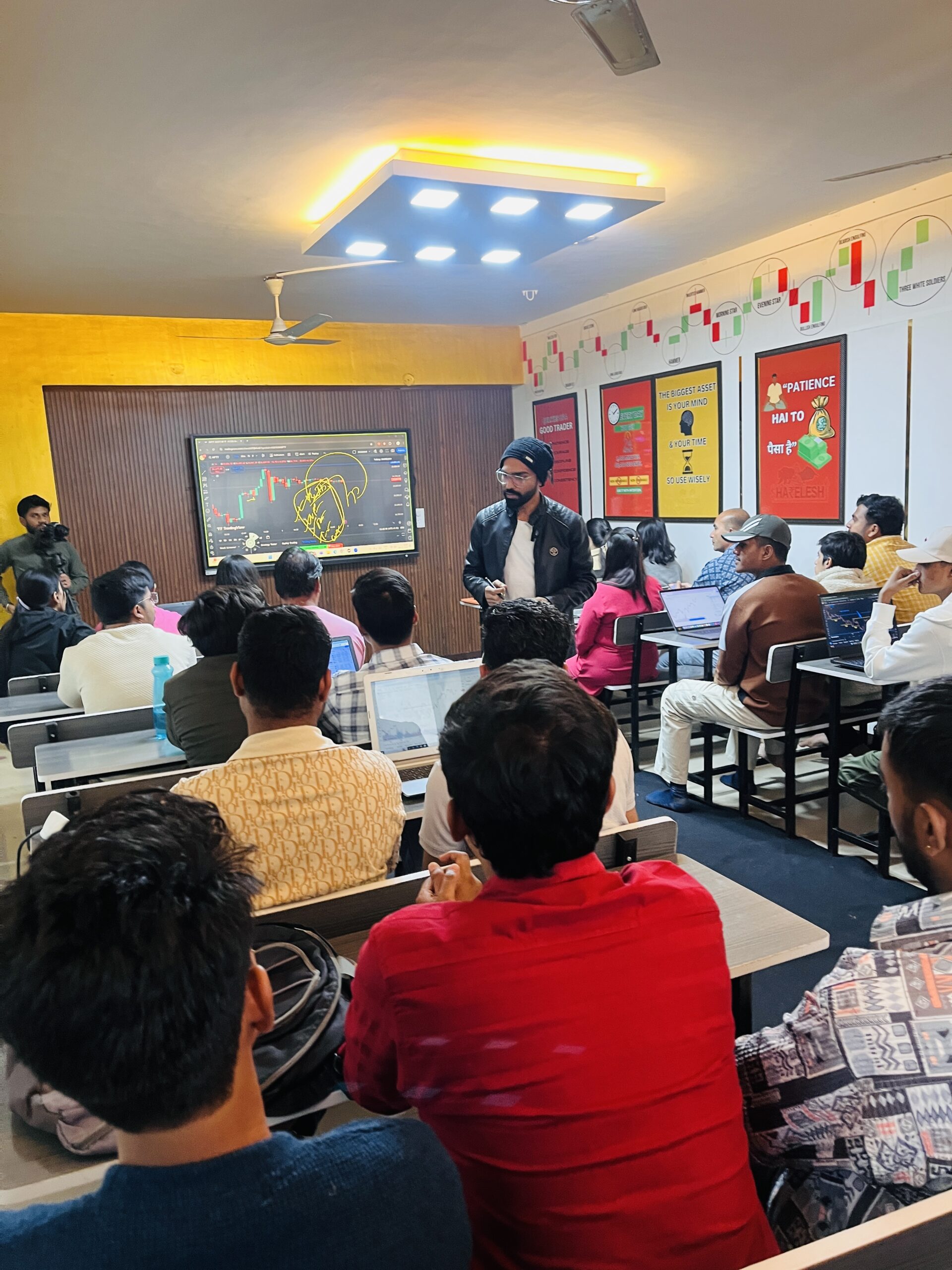
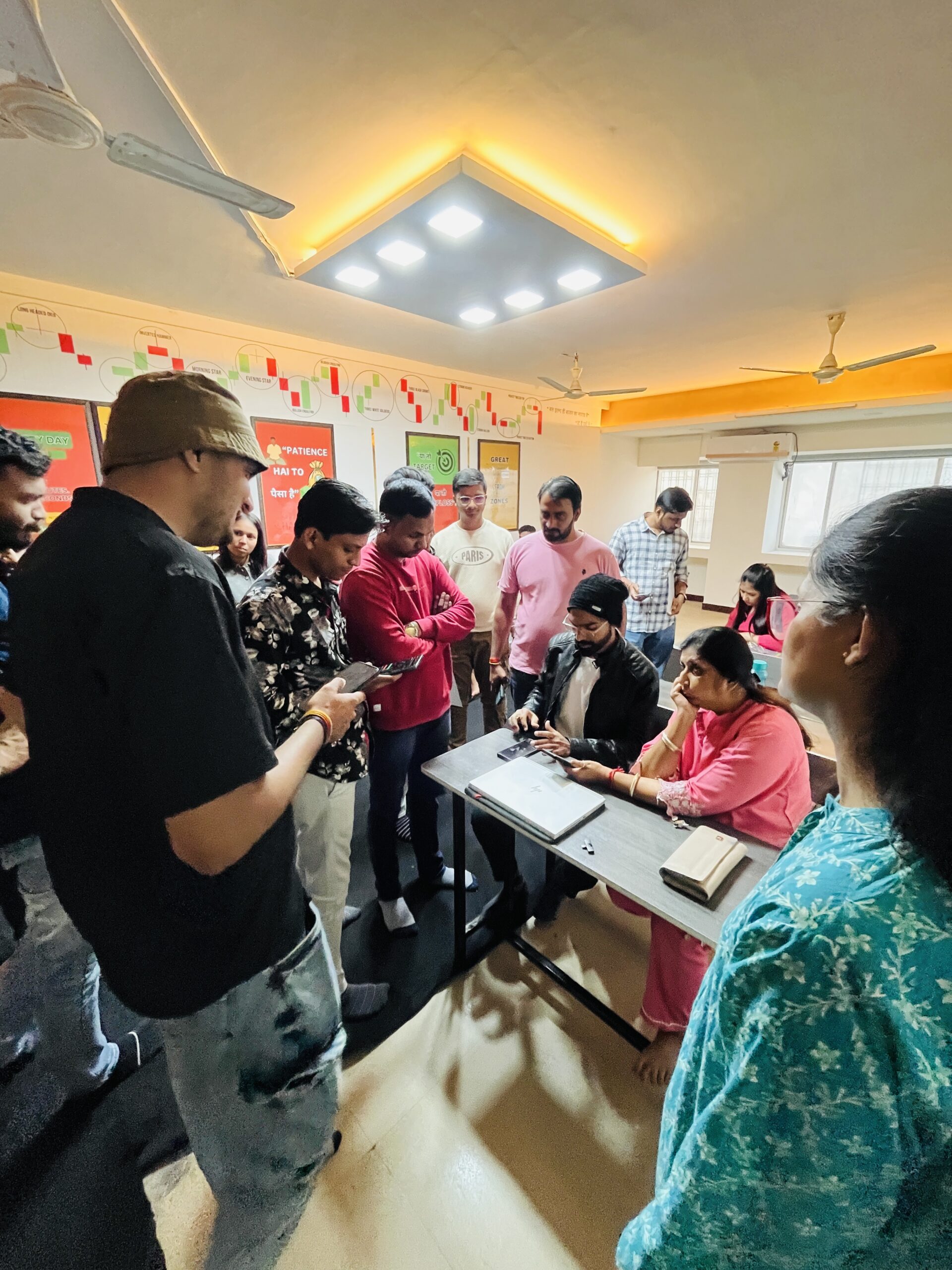
In my 17+ years as a trader and mentor at Sharelesh, I have guided thousands of students across stocks, forex, and crypto. The ones who became consistently profitable all followed a structured path. The ones who failed all took shortcuts. This blog is that structured path written honestly, sequentially, and specifically for Indian traders in 2026.
The Honest Truth How Long It Actually Takes and What to Expect
Before anything else, let us address the question every beginner wants answered but nobody answers honestly: How long does it take to learn the stock market and become profitable?
The honest answer is minimum 6 months of serious, structured learning before you should trade with meaningful real money. And realistically, 12 months before you develop genuine consistency.
Anyone who tells you otherwise is either selling something or has never taught real students in a real classroom.
Here is what those 12 months actually look like:
- Months 1–3: Foundation building, technical skill development, and demo trading practice.
- Months 4–6: Small live account, real money with strict risk management, building consistency.
- Months 6–12: Scaling up, specialising, and developing your own trading style.
This timeline is not discouraging it is liberating. Because it means that if you follow the right roadmap for 12 months, you have a genuine, realistic chance of joining the 5% of traders who are consistently profitable. Most people who lose money in the market spent 12 months doing the wrong things. You are going to spend 12 months doing the right ones.
Before You Start Trading: Capital, Knowledge & Mindset
Before you open a trading account or watch a single tutorial, three things need to be in place. Without these, the best roadmap in the world will not help you.
Mindset – Treat It as a Skill, Not a Shortcut
The stock market is not a place to make quick money. It is a place where a skill called trading when developed properly generates consistent income over time. Every time you approach it as a shortcut, the market will teach you an expensive lesson.
At Sharelesh, the first thing we tell every new student is this: come here to learn a skill, not to make money quickly. The money follows the skill. It never comes before it.
Starting Capital – How Much is Right?
Starting with too much capital before developing skills is one of the four biggest mistakes I see at Sharelesh. Large capital creates large emotional pressure and emotional pressure destroys rational decision-making.
Here is the capital guidance we give every beginner:
- Demo account phase : For practice is completely free.
- Small live account phase : Rs.10,000 to Rs.25,000 enough to feel real but not enough to cause financial damage.
- Growing account phase : Rs.25,000 to Rs.1,00,000 only after demonstrating consistent discipline on smaller capital.
- Scaling phase : Scale based on performance, never based on desire.
Emotional Readiness – The Most Ignored Requirement
Ask yourself honestly: Can you accept losing Rs.500 on a trade without immediately opening another trade to recover it? Can you follow a rule even when your gut says to break it? Can you sit on your hands and not trade when there is no valid setup?
If the honest answer to any of these is no your first work is not charts and indicators. It is building the mental discipline that makes following a system possible. At Sharelesh, we address this from Day 1 because emotional readiness is the foundation everything else is built on.
Phase 1 Foundation (Month 1) : Market Structure, Basics and Demo Account
What to Learn in Month 1
The goal of Month 1 is not to find trades. The goal is to understand the environment you are about to operate in. Specifically, you need to understand:
How the Indian stock market works: What is NSE and BSE? What is a Nifty 50 stock? How does a trade actually execute from the moment you press buy to the moment shares reach your demat account? What is the difference between equity delivery, intraday trading, and F&O?
Basic market terminology: Bid and ask price, market order vs limit order, circuit breakers, upper and lower circuits, settlement cycles (T+1 in India), and how brokerage and STT are calculated.
How indices work: What is Nifty 50 and how is it calculated? What moves it? Why does your individual stock sometimes move opposite to Nifty? Understanding indices gives you context for every trade you will ever take.
Legal framework: What does SEBI regulate? What are your rights as a retail trader? This knowledge protects you from scams, fraudulent advisors, and illegal trading practices.
Your Month 1 Task
Open a free demo account on any major Indian broker platform all offer demo or paper trading options. Observe the market for two weeks without placing any trades. Simply watch how prices move, how the opening session behaves differently from the afternoon session, and how news events affect individual stocks and indices.
In the second two weeks, start placing demo trades but only after you can clearly state your entry reason, stop loss level, and target before each trade. If you cannot state all three, do not place the trade.
Phase 2 Technical Skills (Month 2) : Charts, Patterns and Entry Strategies
What to Learn in Month 2
Month 2 is where most self-learners make their first critical mistake. They try to learn everything every indicator, every pattern, every strategy simultaneously. As a result, they master nothing.
At Sharelesh, we teach one concept at a time, deeply, with practice between each new concept. Here is the correct sequence:
Candlestick patterns first. Before any indicator, learn to read what price itself is telling you through candlestick formations. Doji, Hammer, Tweezer Top & Bottom, Morning Star, Evening Star these patterns appear on every chart, in every market, across all timeframes. They are the language of price action.
Support and resistance next. These are the most important levels on any chart. Learn to identify them accurately on daily and 15-minute charts for Nifty 50 stocks. This skill alone when developed properly is worth more than ten indicators.
One entry strategy, mastered completely. Do not learn five strategies and practice none of them. Pick one breakout trading, pullback trading, or reversal trading and practice it exclusively on the demo account for the entire month. The goal is to make your entry decisions feel automatic before you add the pressure of real money.
Volume analysis. Price movement with high volume means something different from price movement with low volume. Understanding this distinction improves the quality of every trade you take.
Your Month 2 Task
Continue demo trading every session. After each session, write three sentences in your trading journal what went well, what went wrong, and what you will do differently tomorrow. The trading journal is non-negotiable at Sharelesh from Day 1 and here is why: without it, you remember your winners and forget your losers. With it, your own data starts revealing patterns in your behavior that you cannot see any other way.
What to Learn in Month 3
Month 3 is the most important month in your entire learning journey. This is where the difference between a trader who will eventually succeed and one who will eventually quit is decided.
The focus of Month 3 is not learning new technical concepts. It is proving to yourself that you can follow rules consistently on a demo account, before real money amplifies every emotion.
The 1% rule: Never risk more than 1% of your total capital on any single trade. Practice this calculation before every demo trade until it becomes automatic.
Position sizing: Use the formula Position Size = Maximum Risk ÷ Risk Per Unit before every single trade. This means your position size is always determined by your stop loss distance, never by how confident you feel.
Daily loss limit: Set a maximum daily loss of 2 – 3% of capital. When that limit is hit, stop trading for the day. No exceptions. Practice this on demo first because if you cannot honour a daily loss limit when there is no real money at stake, you will definitely break it when there is.
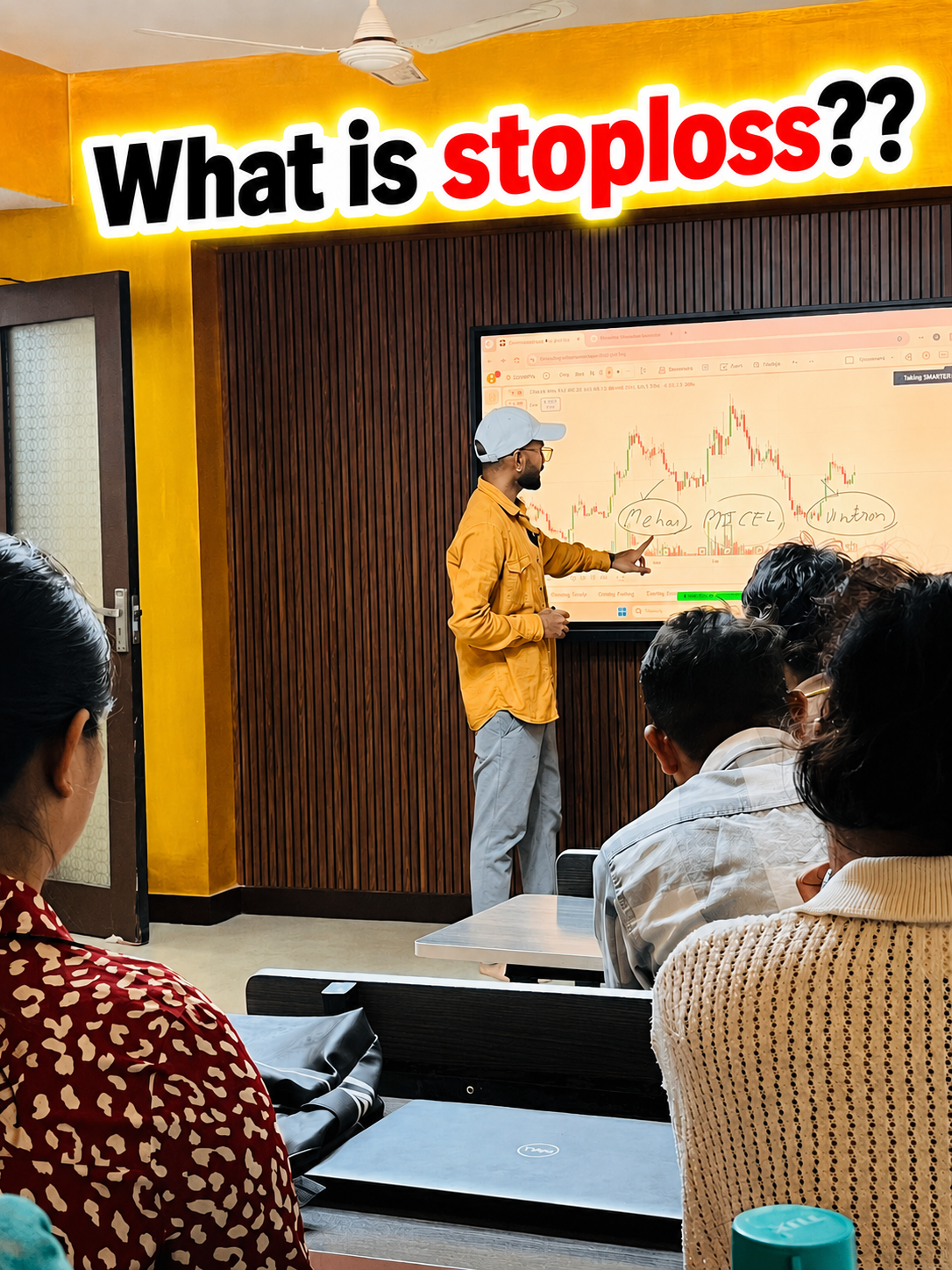
Stop loss discipline: Place a stop loss on every demo trade before entry. Never move it further away from your entry. Practice this until it is a habit you cannot break.
Your Month 3 Milestone
By the end of Month 3, you should be able to answer yes to all of the following:
- Did I follow my entry rules on every trade this month?
- Did I honour my stop loss on every trade?
- Did I stay within my daily loss limit every session?
- Did I record every trade in my trading journal?
If the answer to all four is yes you are ready to move to a small live account. If the answer to any one is no spend another month on demo until all four are yes. This is not a punishment. This is the standard that protects your real capital.
Phase 4 Small Live Account : Real Money and Capital Progression
The Transition to Real Money
Moving from demo to live trading is one of the most psychologically challenging transitions in the entire learning journey. On demo, a Rs.500 loss feels like nothing. On live, even a small loss triggers emotions that were completely absent during practice. This is normal. It is also exactly why you spent three months building habits on demo so those habits can carry you through the emotional intensity of live trading.
Start with Rs.10,000 to Rs.25,000. Trade the smallest possible position sizes. Your goal for Months 4–6 is not profit, it is consistency. Specifically:
- Execute your entry rules correctly on every trade
- Honour every stop loss without exception
- Stay within your daily loss limit every session
- Maintain your trading journal without gaps
Capital Progression Guide When to Add More Money
At Sharelesh, we give students a clear capital progression framework based on performance, not desire:
Add capital only when: You have completed 30 consecutive trades following all your rules, your win rate matches your strategy’s expected performance, and you have not broken a single risk management rule in the past 30 days.
Never add capital because: You want to recover previous losses faster, you had a good week and feel confident, or someone told you a specific stock is going to move.
Capital progression must be earned through demonstrated discipline not purchased through desire.
Phase 5 Scale and Specialise (Month 6 and Beyond)
By Month 6, if you have followed this roadmap honestly, something important has changed. You are no longer a beginner. You have a tested strategy, a proven risk management system, and most importantly a track record of your own behavior under pressure.
Now is the time to specialise. At Sharelesh, we guide students to choose one area to deepen their expertise:
Intraday trading: High focus, session-based, requires fast decision-making and strong emotional control.
Swing trading: Ideal for salaried professionals who cannot monitor screens all day. Holds positions for days to weeks. Requires patience and the ability to manage overnight risk.
Positional trading: Longer-term holds based on technical and fundamental analysis combined. Lower stress, fewer trades, but requires strong conviction in your analysis.
Choose one. Master it. The traders who try to do all three simultaneously master none of them.
Once you have completed Phases 1 through 4 and are consistently profitable in equity trading, and only then, is it time to consider options and F&O.
At Sharelesh, this is our core philosophy and it is non-negotiable: master equity trading first. Use your equity profits to trade options never your original capital or savings.
The options market is a derivative market. It is derived from the spot price of equity shares. If you cannot trade equity profitably, you have no foundation to trade its derivative.
But the deeper reason is psychological. When you trade options with money the market gave you not your salary, not your savings, not your EMI money your emotional relationship with that capital is completely different. Fear reduces. Greed becomes manageable. The desperate need to recover losses disappears. Your decision-making improves instantly and dramatically.
This single philosophy is what separates the Sharelesh approach from every YouTube tutorial and every generic trading course. It is the most important thing in this entire blog.
Ready to Learn the Stock Market from Scratch?
Self Learning vs Structured Mentorship - What the Difference Actually Costs You
Many students come to Sharelesh after spending 12 to 18 months trying to learn trading on their own through YouTube, books, and free online content. Without exception, every one of them says the same thing: “I wish I had done this properly from the beginning.”
Here is the honest comparison:
Self learning through YouTube and free content: You will find excellent individual pieces of information a good video on candlesticks here, a decent explanation of risk management there. However, nobody organises this information in the right sequence for you. Nobody tells you what to practice this week and what to ignore until month four. Nobody reviews your trades and tells you what you are doing wrong. And nobody holds you accountable when you break your rules.
The result is that most self-learners spend 12 to 18 months absorbing information without building the sequential, practiced skills that actually make trading profitable. They know a lot. They trade poorly.
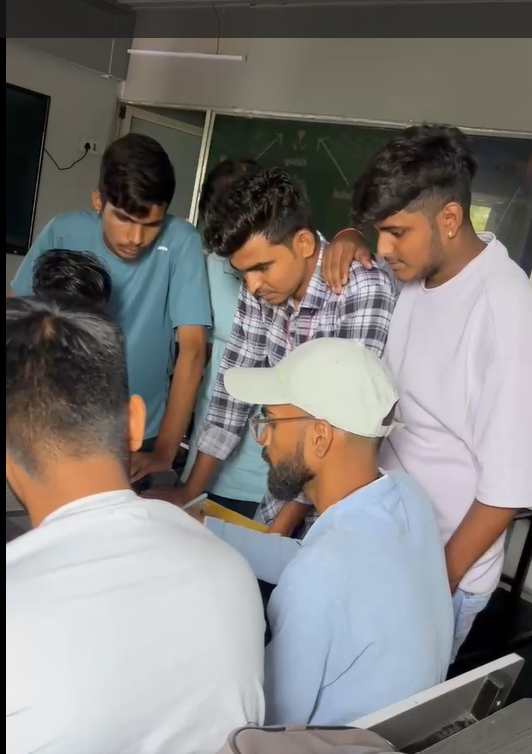
Structured mentorship at Sharelesh: Every concept is taught in the correct sequence. Practice is built into the curriculum, not optional. A mentor with 17+ years of real market experience reviews your progress, identifies your specific weaknesses, and corrects them before they become expensive habits. And the accountability of a structured program means you actually follow the roadmap instead of taking shortcuts.
The cost of self-learning is not just money lost on bad trades. It is 12 to 18 months of time, the most valuable resource you have spent going in circles when a structured path was available.
Common Mistakes People Make While Learning the Stock Market
After teaching thousands of students at Sharelesh, these are the four most costly learning mistakes I see and how to avoid every one of them.
Mistake 1 – Watching YouTube for months without practicing on demo. Watching is not learning. You can watch 500 hours of swimming videos and still drown the first time you enter water. Trading is identical. Information without practice builds false confidence the most dangerous state a beginner trader can be in. Practice every concept on a demo account before moving forward.
Mistake 2 – Jumping to F&O before mastering equity. F&O requires skills, emotional discipline, and market understanding that only come from equity trading experience. Every student who has ever come to Sharelesh after an F&O loss skipped this foundation. Without exception. Do not repeat their mistake.
Mistake 3 – Learning theory without maintaining a trading journal. Your trading journal is your mirror. It shows you not just what trades you took, but why you took them, how you felt when they went against you, and what decisions you made under pressure. Without this data, you cannot identify your own patterns and you will repeat your mistakes indefinitely.
Mistake 4 – Starting with too much capital before developing any skills. Large capital creates large emotions. Large emotions destroy rational decision-making. Start small. Build skills. Scale only after demonstrating consistency. This sequence is not timid, it is the professional approach.
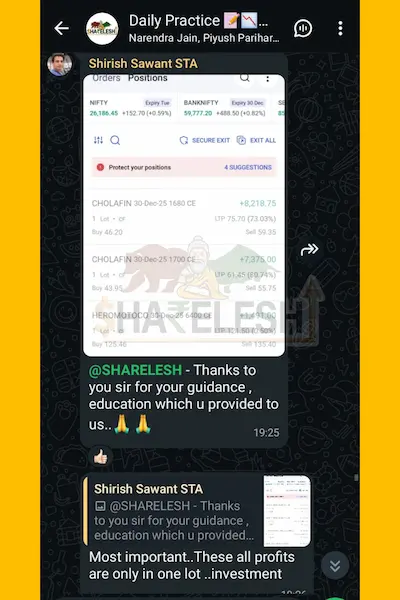
The Proof - From Student to Consistent Profitable Trader
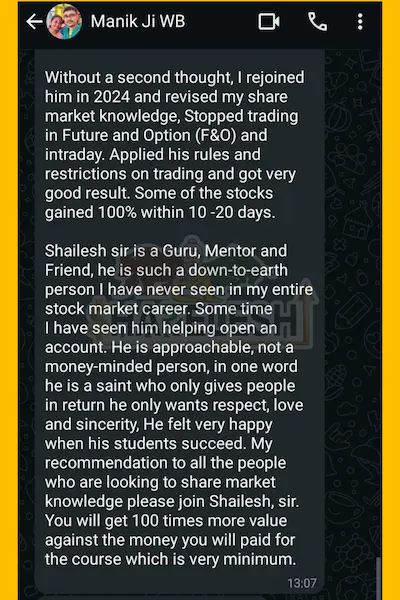
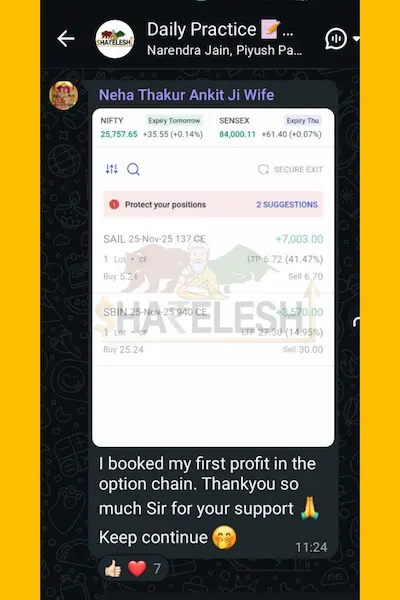
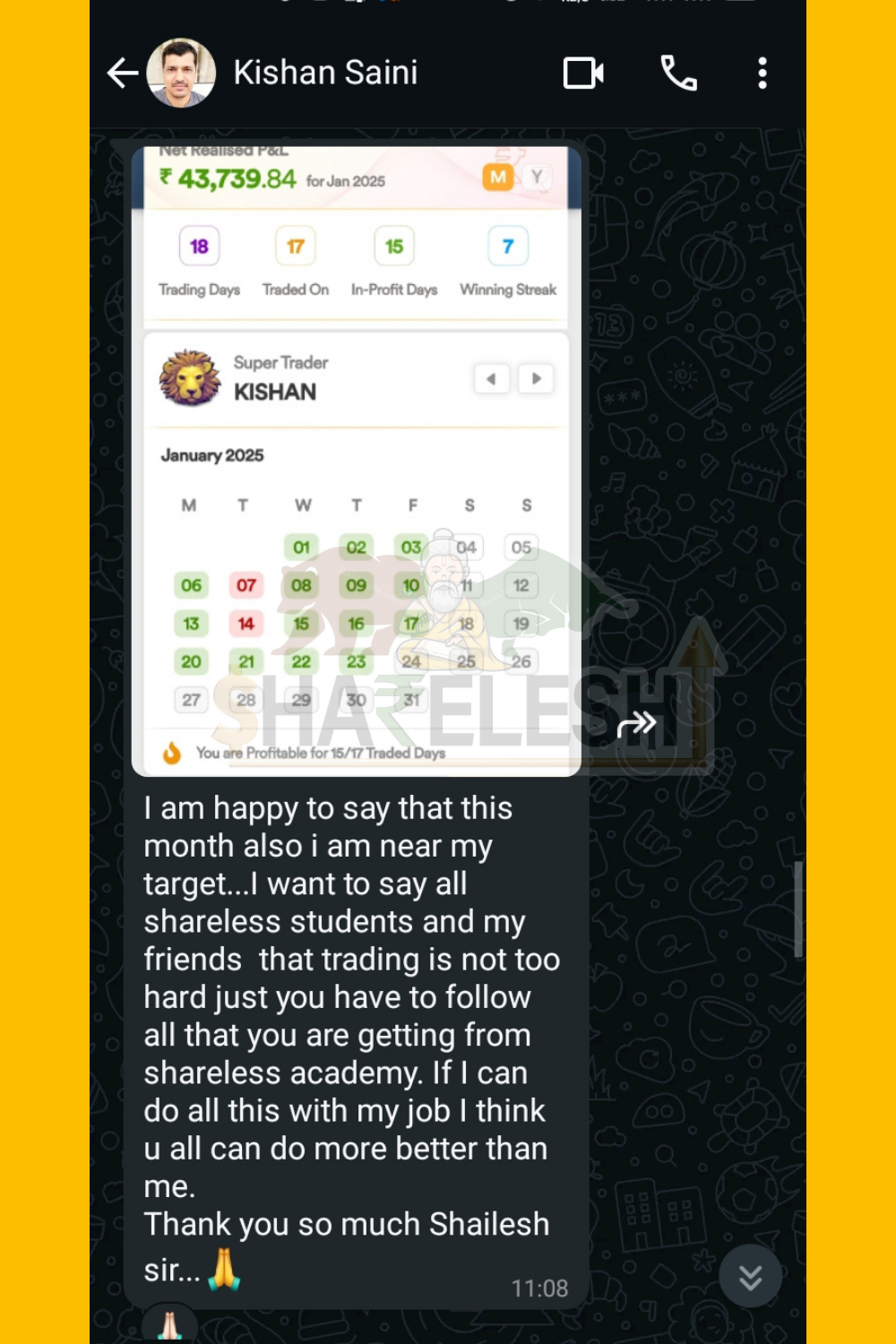
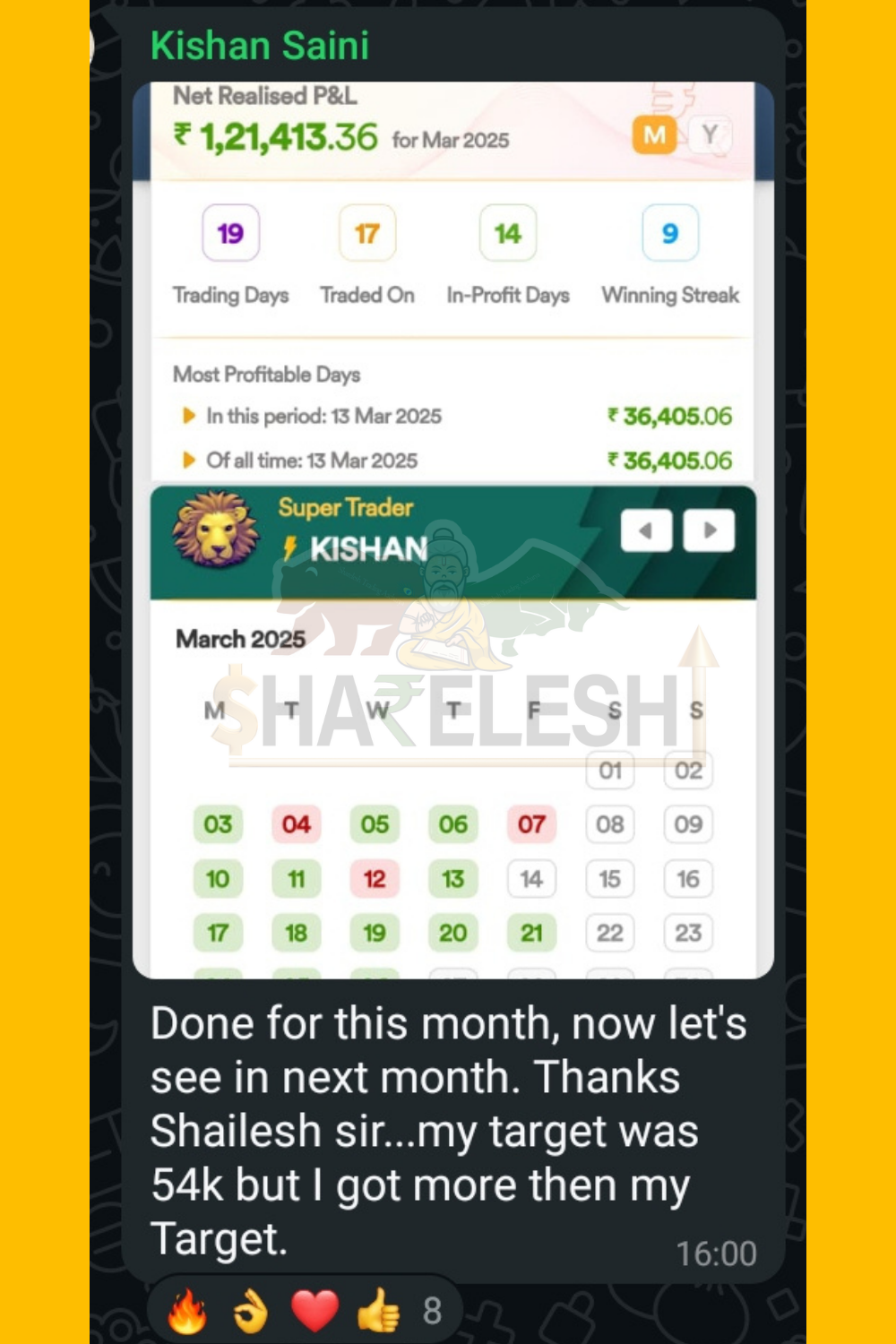
At Sharelesh, our measure of success is not how quickly a student starts trading it is how long they trade profitably.
One of our students came to us after losing a significant amount in the stock market on his own. He had spent months watching YouTube videos, reading trading books, and following tips from WhatsApp groups. He knew the theory well. But his account told a different story. When he joined Sharelesh, we started him from the beginning equity foundation first, demo practice, risk management, journal. It took patience. There were months where the progress felt slow. But the foundation built during those months is what created the consistency that followed. Today, he trades profitably on a regular basis not because he found a secret strategy, but because he finally built the right foundation in the right sequence.
Another Sharelesh student, a salaried professional who could only practice in the evenings and on weekends followed this exact roadmap part-time. He never quit his job to “trade full time” before he was ready. He built his skills slowly, consistently, and correctly. Today, his trading income supplements his salary meaningfully and he has the discipline and the system to keep growing it.
Frequently Asked Questions About Learning the Stock Market from Scratch
Q: How long does it take to learn stock market trading in India?
At Sharelesh, we recommend a minimum of 6 months of serious, structured learning before trading with meaningful real capital and realistically 12 months before developing genuine consistency. Anyone promising profitable trading in days or weeks is misleading you.
Q: How much money do I need to start learning stock market trading?
For the learning phase on a demo account, the cost is zero. For a small live account in Months 4–6, ₹10,000 to ₹25,000 is sufficient. Never start your learning journey with large capital, skills must come before scale.
Q: Should I learn stocks first or jump straight into options trading?
Always learn equity trading first. At Sharelesh, this is our core philosophy options is a derivative of equity. Master the underlying asset before trading its derivative. Use your equity profits to fund your options trading never your original savings.
Q: What is the most important thing to learn first in stock market trading?
At Sharelesh, Day 1 starts with four non-negotiables market structure, candlestick patterns, risk management, and trading journal. Master these four in the right sequence and everything else in your trading journey falls into place.
Q: Is stock market trading suitable for everyone?
Trading suits people who are disciplined, process-oriented, and able to manage emotions under pressure. It does not suit people who are looking for quick income, cannot accept losses as part of the process, or are unwilling to follow a structured learning path. Honest self-assessment before starting saves enormous time and money.
Your Roadmap Starts Today - The Right Way
The stock market has made disciplined, patient, properly educated traders genuinely wealthy over time. The same market has taken money from impatient, underprepared traders who skipped the foundational steps.
The difference between those two outcomes is not intelligence, luck, or the right tip at the right time. It is sequence. It is structure. It is the willingness to follow a proven roadmap completely even when it feels slow rather than jumping to the exciting parts before you are ready.
At Sharelesh, we have built that roadmap over 17+ years of teaching thousands of students across stocks, forex, and crypto. We have seen every mistake. We have identified every shortcut that leads to loss. And we have designed a curriculum that gives every student from complete zero to experienced trader the correct foundation, the right sequence, and the mentorship that makes the difference between knowing and actually doing.
If you are serious about learning the stock market from scratch and building a genuine, consistent trading career not a lucky week, not a good month, but a career – Sharelesh is where that journey begins correctly.
Disclaimer: The content shared on this blog is purely for educational and informational purposes related to the stock market and trading. We do not provide any financial advice, investment recommendations, or profit guarantees. Trading and investing involve market risk.