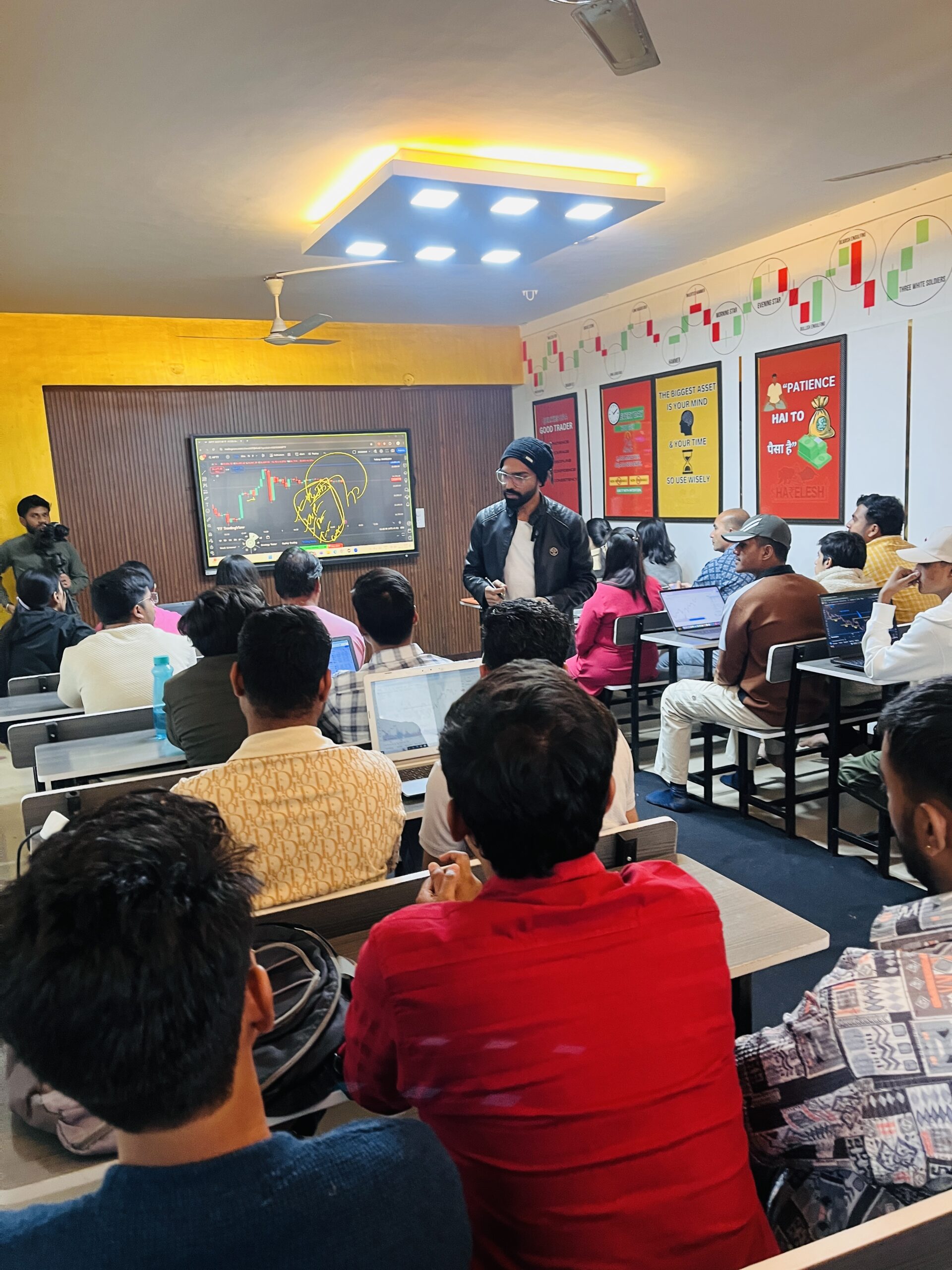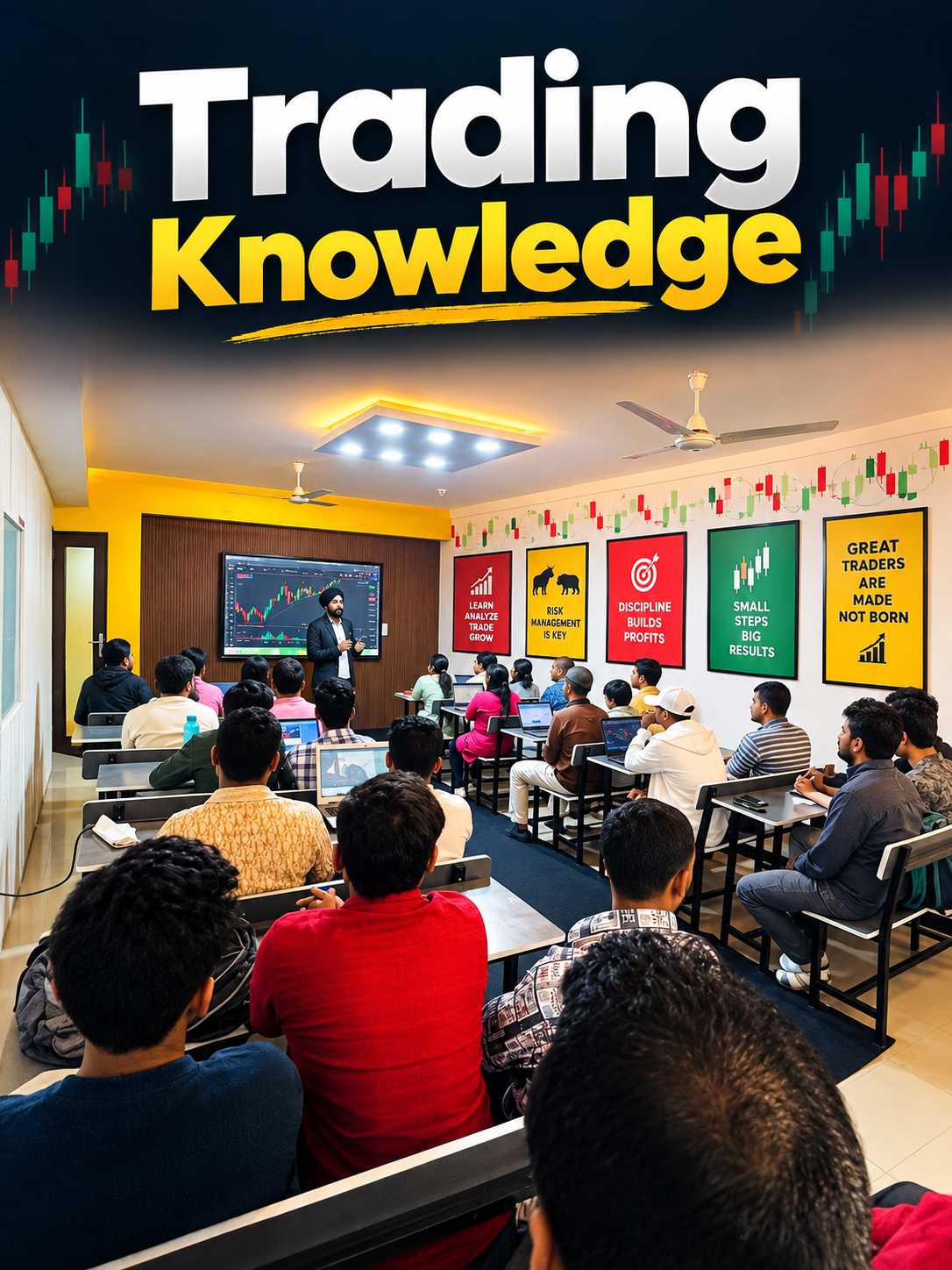

Capital protection in trading is one of the most important lessons every trader must learn. Many traders focus on making profits, studying candlestick patterns, analysing charts, and finding profitable strategies, but they overlook a crucial question: why do traders lose money even when they understand the market? The answer often lies in poor risk management, ignoring stop-loss rules, emotional decisions, and a lack of trading discipline. At Sharelesh Trading Academy, we believe that learning to protect your trading capital is just as important as learning how to identify profitable opportunities.
Every trader enters the market with a desire to make money. They learn candlestick patterns, study charts, identify entry points and search for strategies that can help them find profitable opportunities.
But there is one important question that many beginners forget to ask themselves: Before learning how to make money in the market, have you learned how to protect the money you already have?
At Sharelesh Trading Academy, one observation stands out when teaching students about trading. Some students follow their stop-loss rules strictly, even when a trade ends in a loss. Others understand the concept but continue making their own decisions when a trade moves against them. They expect the market to reverse, ignore their predefined exit levels and repeat the same mistakes.
Sometimes, it takes a substantial loss before they truly understand why capital protection matters.
This raises an important question: Why do traders sometimes ignore the very rules they know are designed to protect them?
The answer goes beyond technical analysis. It involves human behaviour, expectations and the difficulty of accepting that a decision did not work out as planned.
Knowing About Stop-Loss and Following It Are Two Different Things
Ask a beginner whether a stop-loss is important, and many will say yes. They may even explain how it works.
A stop-loss is an exit level intended to limit the loss on a trade if the market moves against the trader. Before entering a trade, a trader can identify the point at which the original trade idea is no longer valid and plan an exit accordingly.
But knowing this concept and following it under pressure are two different things.
Imagine a trader buys a stock at rs500 and plans to exit at rs490 if the trade moves against them. The planned risk is rs10 per share, excluding costs and slippage.
When the price falls to rs490, the trader faces a decision.
One trader follows the plan and exits. The trade has resulted in a loss, but the trader has respected the predefined risk.
Another trader thinks, “The stock is fundamentally strong. It will recover. Let me wait a little longer.”
The price falls further. Instead of accepting the original decision, the trader starts creating new reasons to remain in the position.
The problem is no longer just the original trade. The trader has abandoned the plan that was supposed to manage its risk.
The market may eventually recover, or it may continue falling. Nobody knows the outcome with certainty. What matters is that the trader has replaced a predefined decision with hope.
A stop-loss is useful only when it is part of a risk-management plan that the trader is prepared to follow
Why Do Traders Refuse to Accept a Loss?
One of the difficult lessons in trading is accepting that a good decision-making process cannot guarantee that every trade will be profitable.
Even a well-planned trade can fail. Markets respond to changing information, uncertainty and unexpected events.
Yet some traders interpret a losing trade as evidence that they have made a personal failure. They want to prove that their analysis was right.
This can lead to several behaviours.
1. They believe the market must reverse
A trader enters a position after analysing a chart. When the price moves in the opposite direction, they continue believing that their original analysis will eventually prove correct.
Instead of reviewing whether the trade setup remains valid, they wait for the market to return to their entry price.
But the market does not know where they entered. It has no obligation to return to that level.
2. They confuse confidence with stubbornness
Confidence is important when executing a trading strategy. However, confidence should not mean refusing to reconsider a decision when the evidence changes.
A disciplined trader can follow a strategy while accepting that an individual trade may fail.
An undisciplined trader may continue defending a losing position simply because accepting the loss feels uncomfortable.
There is a difference between trusting a tested trading process and insisting that a particular trade must work.
3. They want to avoid the feeling of being wrong
Closing a losing position makes the loss real. Keeping it open allows the trader to imagine that the situation might improve.
This is one reason losses can become larger than originally planned. The trader is no longer making decisions only about the market; they are also trying to avoid the emotional discomfort of accepting the outcome.
4. They try to recover the money immediately
After a loss, some traders enter another trade without waiting for a valid setup. Their priority changes from following a strategy to recovering their money.
This behaviour is commonly called revenge trading.
Unfortunately, the desire to recover money quickly can encourage excessive risk, poor entries and repeated mistakes.
The first loss may have been manageable. The decisions made afterward can create a much bigger problem.
How Can Traders Learn to Protect Their Capital?
Capital protection is not achieved simply by learning the definition of a stop-loss. It requires practical rules and the discipline to follow them.
1. Decide your risk before entering a trade
Before entering a position, identify the trade setup, the level at which the idea becomes invalid and the amount you are prepared to risk.
Do not decide how much risk to take after the trade has already started moving against you.
For example, a trader with Rs1,00,000 in capital might choose to limit the planned risk on a trade to Rs500. This is an illustrative amount, not a universal recommendation. Appropriate risk depends on the trader’s circumstances, strategy and overall exposure.
The important point is to define the risk in advance.
2. Calculate position size instead of choosing it emotionally
Position size should be connected to the planned risk and the distance between the entry and stop-loss levels.
For a simple stock trade:
Position size = Planned monetary risk ÷ Risk per share
If the planned risk is Rs500 and the entry-to-stop-loss distance is Rs10 per share, the calculation gives 50 shares, before accounting for costs, slippage and other constraints.
This approach helps connect the trade decision with a predefined risk limit rather than an emotional desire to make more money.
3. Respect the stop-loss you planned
Once a trade is open, ask yourself whether you are following your original rules or changing them because you do not want to accept the loss.
There can be legitimate reasons to adjust a trading plan when the strategy explicitly permits it. But moving a stop-loss farther away simply to avoid being stopped out can increase the risk beyond what was originally intended.
A stop-loss also cannot guarantee an exact exit price. Gaps, fast markets and slippage can result in a larger loss than planned.
The goal is not to assume that every exit will be perfect. It is to have a risk-management process and follow it as consistently as possible.
4. Stop trading when emotions take control
A loss can affect the next decision. Frustration, fear and the urge to recover money can make a trader abandon their strategy.
Set rules for when to stop trading for the day. These may include a predefined daily loss limit, a maximum number of trades or a requirement to take a break after an emotionally difficult trade.
A break is not a missed opportunity. It can be a way to prevent one poor decision from turning into several.
5. Review your mistakes in a trading journal
After closing a trade, record more than the profit or loss.
Ask yourself:
Did I follow my entry and exit rules?
Was the planned risk appropriate?
Did I move my stop-loss without a valid reason?
Did I enter because of a genuine setup or because I wanted to recover money?
What should I repeat or change next time?
Over time, this record can help identify patterns in decision-making.
The purpose is not to judge yourself for every losing trade. It is to learn which behaviours support your process and which ones repeatedly put your capital at risk.
A Losing Trade Does Not Always Mean You Made a Mistake
There is an important distinction that every trader should understand. A planned loss occurs when a trader follows a reasonable, predefined strategy but the trade does not work out. An avoidable loss may occur when the trader ignores their rules, takes excessive risk or changes the plan impulsively. These are not the same thing.
If a trader follows their plan and the trade reaches the stop-loss, that outcome alone does not prove that the trader made a bad decision. Trading involves uncertainty. On the other hand, if a trader repeatedly ignores their stop-loss and takes risks they never intended to take, there is a process problem that needs attention. The objective is not to eliminate every loss. That is unrealistic.
The objective is to distinguish between the losses that are part of a trading strategy and the additional losses created by poor decisions. A trader who understands this distinction can review their performance more objectively instead of judging every decision by its final monetary outcome.
Do You Need to Lose Your Capital to Understand Risk Management?
Based on the behaviour I have observed among students, some traders understand the importance of a stop-loss only after experiencing significant losses. They may initially believe that their judgment is enough. They may think that waiting a little longer will save a trade. They may assume that the market will eventually move in their favour. When these decisions repeatedly lead to losses, the importance of risk management becomes much more real to them. But there is no reason to wait for that experience.
A trader can learn through education, chart examples, paper trading, trade reviews and disciplined practice before risking substantial money. Paper trading cannot fully reproduce the emotions of risking real capital, but it can help beginners practise following rules and evaluating decisions. The purpose of learning is to reduce avoidable mistakes before they become expensive.
You do not have to lose a large amount of money to learn that protecting your capital matters. You can learn that lesson before entering the market.
The Sharelesh Trading Academy Philosophy: Education Over Tips
At Sharelesh Trading Academy, the objective of trading education is not simply to teach students where to enter a trade or where to book a profit.
Understanding a chart is one part of learning. Understanding risk, managing emotions and following a trading process are equally important parts of the journey.
A student who learns to identify an opportunity but ignores risk management has not yet developed a complete trading process.
That is why learning should begin with concepts, continue through practice and include regular reviews of decisions.
Beginners should first understand how the market works, how risk is calculated, how stop-losses are used and why discipline matters. They can practise their approach and develop consistency before increasing their exposure to financial risk.
There are no shortcuts that can eliminate market uncertainty, and no strategy can guarantee that every trade will make money.
The goal of education is to help students make informed decisions, understand the risks they are taking and become less dependent on tips or other people’s trade calls.
Because ultimately, the aim is not simply to follow someone else’s decisions. It is to develop the knowledge and discipline needed to make your own decisions responsibly.
Final Thoughts: First Protect Your Capital, Then Focus on Making Money
Every trader wants to make money. There is nothing wrong with that goal.
The problem begins when the desire to make money becomes so strong that the trader stops respecting the risk involved.
A trader who refuses to accept a small loss may end up taking a much larger one. A trader who tries to recover money immediately may abandon the very strategy they spent time learning.
The market will not always reward a correct analysis, and it will not always move according to our expectations. What we can work on is our preparation, our risk-management rules and our response when a trade does not work out.
So, before asking how much money you can make from your next trade, ask yourself three questions:
– How much am I prepared to risk?
– At what point will I accept that this trade is not working?
– Am I willing to follow that decision even when doing so means accepting a loss?
These questions may not make every trade profitable, but they can help you approach trading with greater discipline.
Remember: In trading, making money is the goal, but protecting your capital is a responsibility.
Learn to protect what you have before risking it in the hope of making more.
Education over tips. Risk management before profit. Discipline before expectation.
— Sharelesh Trading Academy
Disclaimer: This article is for educational purposes only and does not constitute investment advice, trading recommendations or a guarantee of profits. Trading involves financial risk, and losses can exceed planned amounts in certain market conditions.