The Honest Answer Nobody Gives You (2026)
The Dream Everyone Has and the Reality Most Ignore
Every trader has imagined it at least once.
No alarm clock. No office commute. No boss. Just you, your charts, a cup of chai, and the freedom to trade from anywhere in the world. Make your trades by noon, close the laptop, and enjoy the rest of the day. Financial freedom through trading – the dream that millions of Indians are chasing right now.
And here is the honest truth that most trading courses, YouTube channels, and social media influencers will never tell you: that dream is real but the path to it is nothing like what they show you.
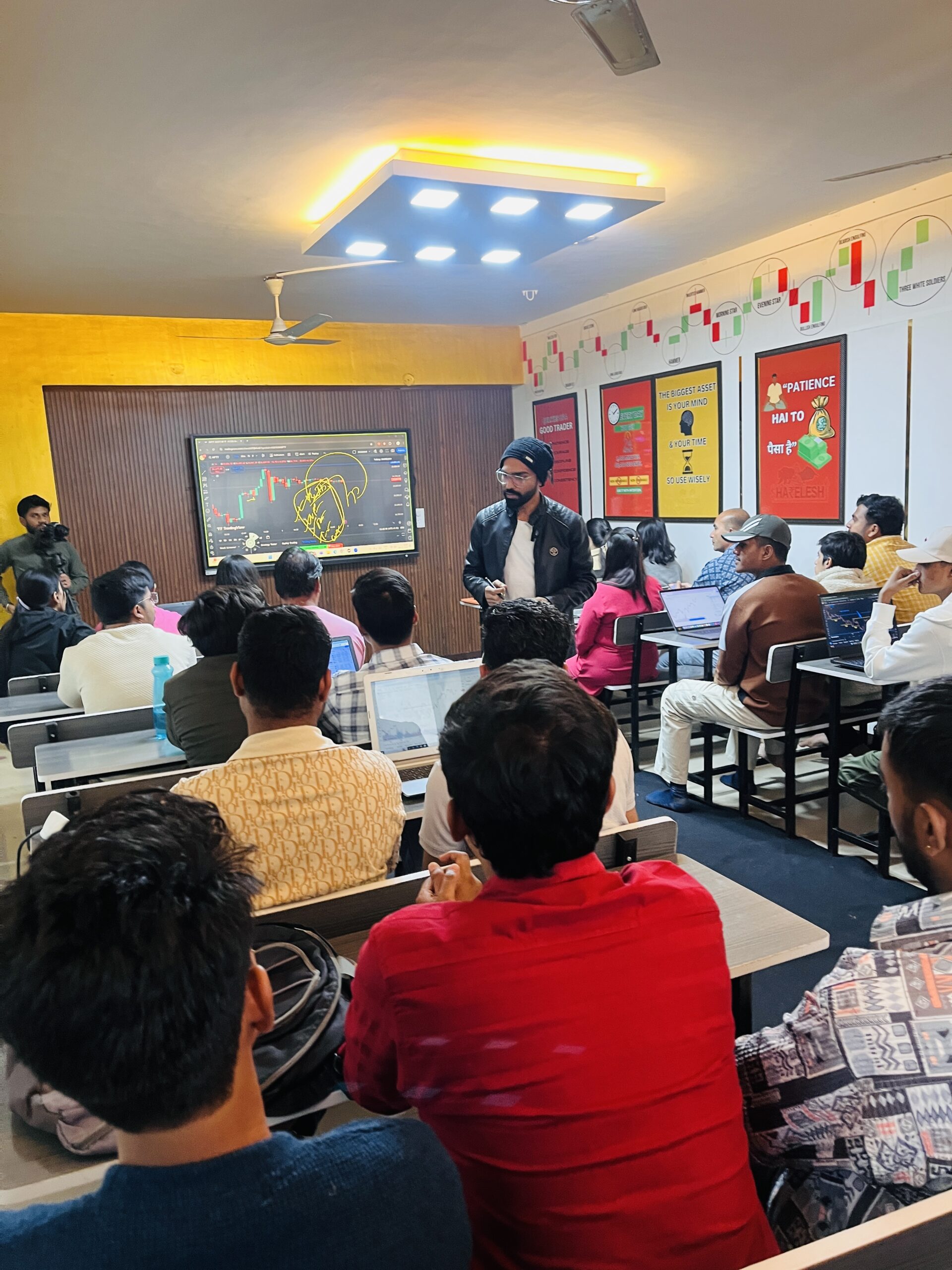
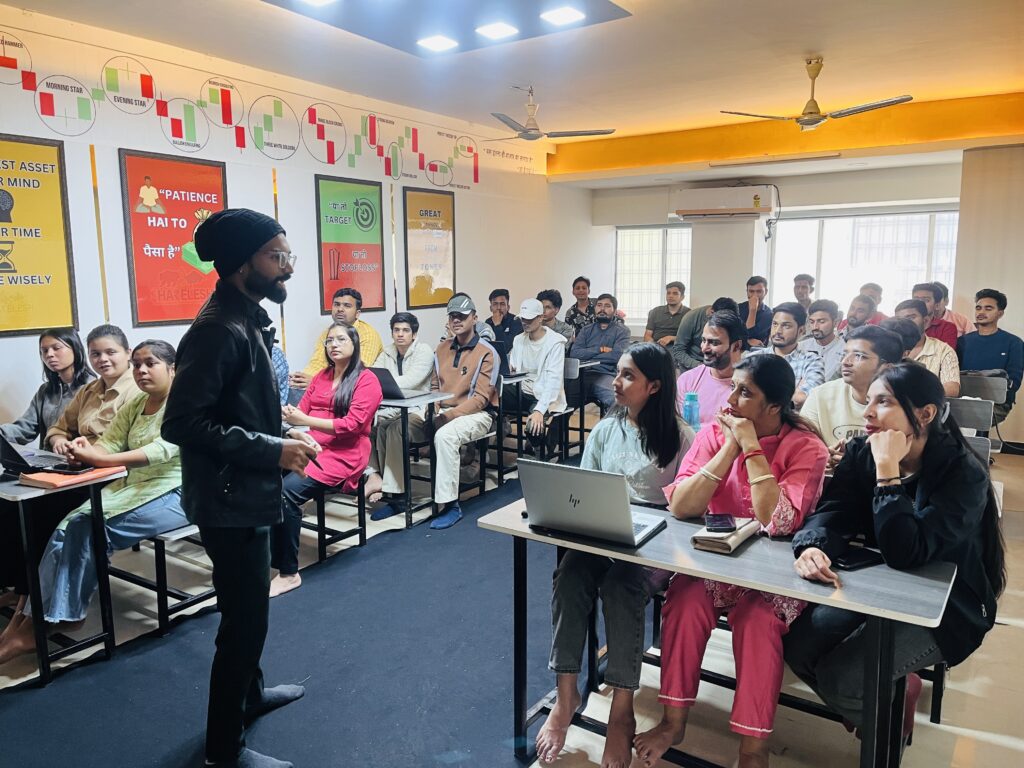
In my 17+ years as a trader and mentor at Sharelesh, I have guided thousands of students through this exact question. Some of them are now earning consistently from trading alongside their jobs – building real secondary income month after month. A small number of them have successfully transitioned to full time trading after years of disciplined preparation. And many others have made expensive mistakes by rushing a process that cannot be rushed.
This blog gives you the honest, complete answer with real INR numbers, specific milestones, and the exact framework Sharelesh uses to guide students from zero to consistent trading income, at whatever level is right for them.
The Honest Truth - What SEBI Data and Real Numbers Say
Before we discuss what is possible, let us look at what is real.
SEBI’s official data tells us that 93% of individual F&O traders in India lose money. Not break even – lose money. Over the FY22–FY24 period, 1.13 crore individual traders incurred a combined net loss of Rs1.81 lakh crore. The average loss per trader was Rs2 lakh over three years.
This data does not mean trading cannot generate income. It means trading cannot generate income without proper education, structured skill development, and disciplined risk management. The 93% who lose are not unlucky. They are underprepared.
The 7% who are consistently profitable treat trading exactly as Sharelesh teaches – as a skilled profession, not a shortcut to income.
Full time traders in India can earn anywhere between Rs4-10 lakhs annually on average, with top performers earning Rs20-50 lakhs. However, these numbers come with an important context that is almost never mentioned alongside them: these are experienced, consistently profitable traders with significant capital bases – not beginners in their first or second year.
Day trading in India does not earn a fixed monthly salary or a guaranteed amount every month. Trading income is variable. Some months are excellent. Some months are flat. Some months produce losses. Anyone who tells you trading generates a fixed, predictable monthly income like a salary is either misleading you or has never seriously traded with their own capital.
At Sharelesh, we tell every student the same thing from Day 1: trading income is business income – not salary income. Treat it like a business, plan for it like a business, and build it like a business. Never treat it like a fixed monthly paycheck.
Secondary Income First - Why This is Always the Right Starting Point
Here is the Sharelesh philosophy on trading income and it is different from what most people expect to hear.
For most Indian traders, trading as secondary income is the realistic, sustainable, and most profitable goal. Full time trading is possible but it is the destination after years of building, not the starting point.
Why does secondary income first make so much sense?
Your main income removes emotional pressure from every trade. When your salary covers your rent, EMIs, groceries, and family expenses – your trading capital is not survival money. It is growth money. And the psychological difference between trading with survival money and trading with growth money is enormous. Fear reduces. Greed becomes manageable. Stop losses get honoured. Risk management gets followed. Every single trading decision improves because the stakes feel different.
You can afford to learn properly. When trading is your only income source and you are not profitable yet, every losing week creates financial stress that destroys rational decision-making. When your job covers your expenses, a losing month in trading is a learning experience – not a crisis.
Compounding works in your favour. A salaried trader who consistently earns 3–5% monthly returns on their trading capital and reinvests those returns alongside regular capital additions builds wealth faster than someone who withdraws trading profits every month to pay bills.
At Sharelesh, we have seen this pattern produce remarkable results. One of our students – a salaried professional – followed this exact approach. He kept his job, joined Sharelesh, built his trading skills correctly over 12 months, and gradually grew his trading account alongside his salary. Today, he earns consistently from both sources his trading income supplements his salary meaningfully every month, and his capital base continues to grow. He did not give up security to chase trading income. He built trading income while keeping his security intact.
How Much Can You Realistically Earn? - Real INR Income and Capital Guide
This is the question every aspiring trading income earner wants answered specifically. Here are honest, realistic numbers for Indian traders in 2026.
| S.No. | Experience Level | Monthly Return | Annual Return |
|---|---|---|---|
|
1. |
Beginner (0–12 months) |
Break even to 1% |
0–12% |
|
2. |
Developing (1–2 years) |
1–3% |
12–36% |
|
3. |
Consistent (2–4 years) |
3–5% |
36–60% |
|
4. |
Advanced (4+ years) |
5–8% |
60–96% |
⚠️ These are realistic targets for disciplined, educated traders – not guarantees. Trading income varies month to month. Some months exceed these targets. Some months produce losses.
The Emotional Reality - Trading With Job Security vs Without It
This is the section that changes how most people think about the full time trading dream and it is the section nobody else writes about honestly.
If you need to be profitable, that creates undue performance pressure and emotional distraction. This one sentence contains more truth about full time trading than most books on the subject.
When trading is your only income source and you are not consistently profitable yet, every trading session carries existential weight. A losing Monday does not just affect your trading account – it affects whether you can pay your bills this month. That pressure changes your psychology completely.
Stop losses get moved because you cannot afford to take the loss. Position sizes increase because you need to recover faster. Trading days that should be skipped, because the market has no clear setup – get traded anyway because the pressure to generate income is overwhelming.
Ironically, the trader who needs trading income most desperately is the trader least likely to generate it, because the desperation destroys the discipline that makes consistent profits possible.
This is precisely why Sharelesh recommends building trading as secondary income first not because full time trading is impossible, but because secondary income builds the psychological foundation that makes full time trading eventually viable.
When Are You Actually Ready for Full Time Trading? - Sharelesh Milestone Framework
At Sharelesh, we give students specific, measurable milestones before we support any decision to reduce job dependence for trading income. These are not guidelines – they are requirements.
Milestone 1 : 12 Consecutive Months of Consistent Profitability
Your trading income must equal or exceed your current salary for 12 consecutive months not 3 months, not 6 months, but 12. Markets cycle through different conditions across a year – bull phases, bear phases, sideways markets, high volatility events. Only 12 months of consistent profitability proves your edge works across all market conditions, not just favourable ones.
Milestone 2 : 12 Months Emergency Fund Completely Separate
As described above – 12 months of all living expenses sitting in a separate account, never touched, never counted as trading capital. This is non-negotiable at Sharelesh.
Milestone 3 — Proven Risk Management Track Record
Not a single instance of breaking your risk management rules — stop loss moved, daily loss limit violated, revenge trading — in the past 6 months. If you cannot maintain discipline with job security behind you, you will not maintain it without it.
Milestone 4 : Written Trading Plan With Documented Edge
A backtested, documented trading plan with at least 200 historical trades proving your strategy works with positive expectancy. Not a strategy you believe in – a strategy with documented proof.
Milestone 5 : Tax and Legal Structure in Place
Since trading income is classified as business income in India, you need proper accounting, GST registration if applicable, and a CA who understands trading taxation before you make it your primary income source.
Only when all five milestones are met does Sharelesh support a student’s decision to consider full time trading. Not before.
The Funded Trading Path - Trading Big Capital Without Personal Risk
There is a third path between “trading as secondary income” and “full time trading with personal capital” and it is one that very few Indian traders know about, even though one of Sharelesh’s own students has proven it works at the highest level.
Funded trading programs – such as FundedNext, FTMO, and others – allow traders to pass an evaluation challenge and receive access to a funded trading account worth Rs10 lakh to Rs1 crore or more. The trader keeps 70–90% of the profits they generate on this funded capital, without risking their own money beyond the evaluation fee.
For Indian traders with proven skills but limited personal capital, funded trading offers a remarkable opportunity: generate trading income at scale without the capital requirement that makes full time trading inaccessible to most people.
One of our students at Sharelesh – Anand Choudhary proved exactly what this path can look like at its highest level. Anand entered the FundedNext Global Forex Trading Competition with over 50,00,000 participants worldwide. He achieved a Global Rank of 432 out of 5,00,000 traders – placing him in the Top 50 forex traders in all of India.
Anand did not achieve this by trading with crores of personal capital. He achieved it by building the right foundation at Sharelesh – equity first, risk management discipline, and the psychological readiness to execute his strategy under pressure. His result is proof that the Sharelesh approach produces traders who can compete and win at a global level.
Tax on Trading Income India - What Every Aspiring Full Time Trader Must Know
If you are serious about trading as a source of income, understanding the tax implications is not optional — it is a legal requirement.
Under Indian tax laws, income from F&O trading is treated as business income, not capital gains. This classification applies regardless of whether you trade occasionally or actively.
This means:
You file ITR-3 – the income tax return for business income – not ITR-2 which most salaried individuals use.
Your trading profits are taxed at your income tax slab rate – not at the lower capital gains rates. For traders earning Rs10–15 lakh annually from trading, this means 30% tax on profits above the basic exemption.
You can deduct legitimate trading expenses – brokerage, internet costs, software subscriptions, and other genuine business expenses reduce your taxable trading income. Most retail traders never claim these deductions and overpay tax unnecessarily.
To carry forward F&O losses, you must file ITR-3 before the due date – July 31, 2026 for FY 2025–26. A late filing forfeits the carry-forward benefit permanently.
At Sharelesh, we strongly recommend every student who is building trading as a significant income source engage a CA who specifically understands trading taxation – before their income grows to the level where tax mistakes become expensive.
Common Mistakes People Make Chasing Full Time Trading Income
After 17+ years of guiding students at Sharelesh, these are the most consistently expensive mistakes I see from traders who want to make trading their income.
Mistake 1 – Quitting the job too early. The single most damaging decision a developing trader can make. Without job security, financial pressure transforms every trade into a survival decision. Discipline collapses. Risk management fails. The trading that was working as secondary income stops working entirely because the psychological environment has changed completely.
Mistake 2 – Confusing a good month with consistency. Three consecutive profitable months feel like proof that trading income is sustainable. They are not. Markets change. Strategies that work in bull markets fail in sideways markets. Only 12 months of consistent profitability across varying market conditions constitutes genuine proof.
Mistake 3 – No emergency fund. Trading without a financial safety net means every drawdown period becomes a crisis. Crisis-mode trading produces crisis-level results. The emergency fund is not a luxury – it is the psychological infrastructure that makes consistent trading possible.
Mistake 4 – Withdrawing profits instead of compounding. Many traders who begin generating secondary trading income immediately start withdrawing it for lifestyle expenses. This prevents the compounding that builds the capital base required for meaningful full time income. Reinvesting trading profits at least for the first 2–3 years dramatically accelerates the path to financial independence.
Mistake 5 – No tax planning. Traders who build significant income from trading and do not plan for tax find themselves with unexpected large tax bills, penalties for late filing, and missed opportunities to carry forward losses. Tax planning for trading income must start from the first year of consistent profitability not after the income is already large.
The Sharelesh Recommended Path - From Secondary Income to Financial Freedom
Based on 17+ years of mentoring at Sharelesh, here is the complete path we recommend for every student who wants to build real, sustainable income from trading.
Year 1 – Foundation and Learning Keep your job. Join a structured trading program. Learn equity first. Build risk management habits. Demo trade for 3 months. Move to a small live account of Rs10,000–Rs25,000. Focus entirely on consistency and discipline – not income. Trading income target this year: Rs0. Learning and capital preservation are the only goals.
Year 2 – Building Secondary Income With 12 months of structured learning behind you, grow your trading capital to Rs50,000–Rs2,00,000. Apply the 3–5% monthly return target consistently. At Rs2,00,000 capital and 3% monthly returns, you generate Rs6,000 per month – real secondary income. Reinvest all profits. Keep your job. Do not touch the emergency fund.
Year 3 – Growing the Secondary Income Stream Grow capital to Rs5,00,000–Rs10,00,000 through consistent profits and additional capital additions. At this level, trading secondary income of Rs15,000–Rs50,000 per month becomes realistic for disciplined traders. This is genuinely life-changing secondary income – without quitting your job or risking your financial stability.
Year 4–5 – Evaluating Full Time Trading Only now with 3+ years of consistent track record, emergency fund in place, trading income matching salary for 12 consecutive months, and all five Sharelesh milestones met — is it appropriate to evaluate whether full time trading makes sense for your specific situation.
Even at this stage, Sharelesh’s honest advice is: most people are better off keeping both income streams. A salaried professional who also earns Rs50,000–Rs1,00,000 per month from trading has more financial security, more psychological stability, and often more consistent trading results than a full time trader under pressure to generate all income from the market.
Full time trading is possible. For a few of our students – those who have followed the roadmap completely, built the right capital base, and developed genuine trading edge – it has become their reality. But for most disciplined, educated traders, secondary income from trading alongside a job or business is the sustainable, profitable, and psychologically healthy path.
At Sharelesh, we celebrate both outcomes equally — because both represent trading done right.
Frequently Asked Questions
Q: Can trading be a permanent source of income in India?
Yes, but only after years of consistent profitability, sufficient capital (Rs25–50 lakh+), a strong emergency fund, and a business-like approach to trading. At Sharelesh, full-time trading is a long-term goal—not a shortcut to quick income.
Q: How much can I realistically earn from trading in India per month?
A trader with Rs5–10 lakh capital and consistent returns may earn Rs15,000–Rs50,000 per month. However, sustainable trading income requires skill, discipline, proper risk management, and sufficient capital—not beginner luck.
Q: Should I quit my job to trade full time?
At Sharelesh, we advise against quitting your job until your trading income consistently matches your salary for at least 12 months and you have a solid emergency fund. Quitting too early is one of the biggest mistakes aspiring full-time traders make.
Q: Is trading as secondary income realistic for a salaried employee?
Absolutely. Many Sharelesh students earn consistent secondary income from trading while maintaining their jobs.
What is the Sharelesh recommendation for building trading income?
Build trading as secondary income first – alongside your job or business. Master equity trading before options. Reinvest profits for the first 2–3 years.